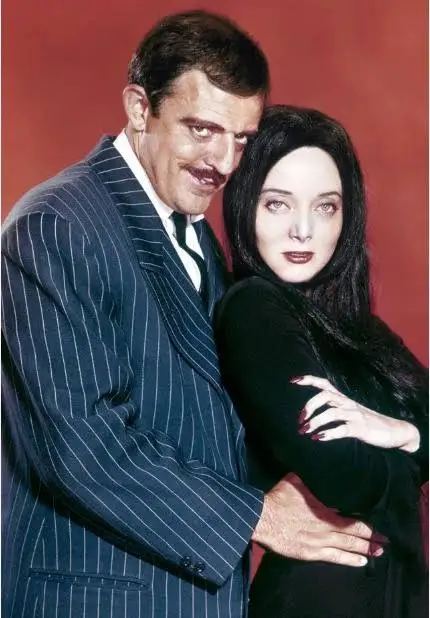
For millions of Americans who grew up watching classic television, some faces never disappear from memory. With his expressive eyes, unmistakable mustache and playful personality, this actor brought laughter, mystery and a special kind of charm into American homes.See more…
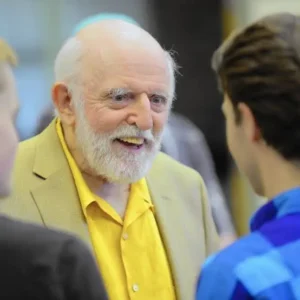
His name is John Astin, the beloved actor who became a television icon through his unforgettable portrayal of Gomez Addams in The Addams Family. But behind the eccentric character was a man whose life and career extended far beyond one famous television role.
Born on March 30, 1930, in Baltimore, Maryland, John Allen Astin grew up in a family that valued education and intellectual curiosity. His father, Allen Varley Astin, was a physicist who led the National Bureau of Standards, now known as the National Institute of Standards and Technology.
As a young man, John initially explored mathematics rather than immediately pursuing Hollywood. He attended Washington & Jefferson College before continuing his studies at Johns Hopkins University, where his interests eventually turned toward theater and performance.
An early experience watching a production of Our Town helped inspire his interest in acting. The experience opened his eyes to the emotional power of live performance and the ability of actors to make audiences laugh, think and feel deeply.
His path to success was not an overnight journey. Before becoming a familiar television face, Astin studied drama, worked in theater and took on practical jobs to support himself. During his early years in New York, he even worked as a janitor while pursuing acting opportunities.
Like many performers of his generation, he began with small parts and stage appearances rather than immediate stardom. He gradually developed the comic timing, distinctive voice and energetic screen presence that would later become his trademarks.
One of his early film appearances came in West Side Story in 1961. Although it was not the role that would define his career, the experience helped establish his presence in the entertainment industry and opened the door to further opportunities.
In 1962, Astin landed a leading role in the television comedy I’m Dickens, He’s Fenster, playing an accident-prone carpenter alongside Marty Ingels. The series had a relatively short run, but it gave viewers an early glimpse of the unusual comic energy that made Astin stand out.
Then came the role that changed everything. In 1964, he was cast as Gomez Addams in The Addams Family, the television comedy inspired by Charles Addams’s macabre cartoons. The series introduced American audiences to a family that was delightfully strange, affectionate and completely comfortable being different.
Gomez was not an ordinary television father. He was passionate, playful, theatrical and endlessly devoted to his wife. Astin gave the character an unmistakable personality, turning every raised eyebrow, exaggerated gesture and enthusiastic reaction into a memorable moment.
His chemistry with Carolyn Jones, who played Morticia Addams, became one of the show’s greatest strengths. Their relationship was affectionate and humorous, and their on-screen romance was remarkably open and playful for a television couple of the 1960s.
Together, Gomez and Morticia challenged the usual image of a television family. They celebrated their children’s individuality, embraced the unusual and remained devoted to one another. Beneath the show’s spooky humor was a surprisingly warm message about acceptance and family love.
Although the original series ran from 1964 to 1966, its popularity did not disappear when the final episode aired. Reruns introduced new generations to the Addams family, allowing Astin’s performance to remain familiar to viewers decades after its original broadcast.
Astin returned to the character in later projects, including the 1977 television movie Halloween with the New Addams Family. He also voiced Gomez in the animated series that premiered in 1992, earning a Daytime Emmy nomination connected to his work on the show.
His career was never limited to one character. In 1966, he briefly played the Riddler in the television series Batman. He later appeared in productions such as Operation Petticoat, Night Court, Freaky Friday and National Lampoon’s European Vacation, demonstrating his ability to move between different styles of comedy.
Astin also explored filmmaking behind the camera. His short film Prelude, released in 1968, earned an Academy Award nomination for Best Live Action Short Film. This achievement revealed another side of an entertainer many viewers primarily knew as the eccentric patriarch of the Addams family.
His personal life included important relationships and changes. He married actress Patty Duke in 1972, and together they raised a family that included her son Sean, whom Astin adopted, and their son Mackenzie. Their marriage ended in divorce in 1985, and Astin later married Valerie Ann Sandobal in 1989.
His connection with education also became a significant part of his life. After decades in entertainment, he taught acting and directing at Johns Hopkins University, the institution where he had studied. He eventually led its undergraduate theater arts program, sharing his experience with students pursuing their own creative ambitions.
Astin’s legacy continued to reach beyond the original television audience. His adopted son, Sean Astin, became a successful actor known for The Goonies and The Lord of the Rings, while his son Mackenzie Astin also pursued acting. The family became another link between generations of American entertainment.
As the years passed, John Astin remained closely associated with the character that made him famous, even as he explored teaching and other creative pursuits. He announced his retirement from acting and teaching in 2022, although he made a return to the screen in 2026 for Attack of the Killer Tomatoes: Organic Intelligence.
Today, his place in television history rests on more than a memorable costume or a famous mustache. He helped create a Gomez Addams who was unusual without being unkind, eccentric without being cold, and deeply loving beneath all the comedy. For viewers who remember gathering around the television in the 1960s, his performance remains a treasured piece of their entertainment history.