GENEVA — Richard Burton, the Welsh coal miner’s son who became one of the most celebrated actors of his generation and whose tempestuous, headline-consuming marriage to Elizabeth Taylor defined an era of celebrity culture, died in his sleep here early this morning. He was 58. The cause was a cerebral hemorrhage, a stroke that brought a sudden and quiet end to a life that had been anything but quiet, a life lived at a scale of fame, wealth, and personal turmoil that few in the modern era have ever approached.
The man who was born Richard Walter Jenkins in a tiny mining village in South Wales, the twelfth of thirteen children, was found dead in his bed at his home in the small village of Celigny by his fourth wife, Sally Hay, a woman who had brought him a measure of peace and sobriety in his final years. The news of his death, which reached Los Angeles within hours, sent a shockwave through the entertainment world and triggered a profound, private grief in the woman who had been his wife twice, his partner in one of the most famous and destructive love affairs of the century, and who, despite two divorces and eight years of separation, remained an inextricable part of his story.
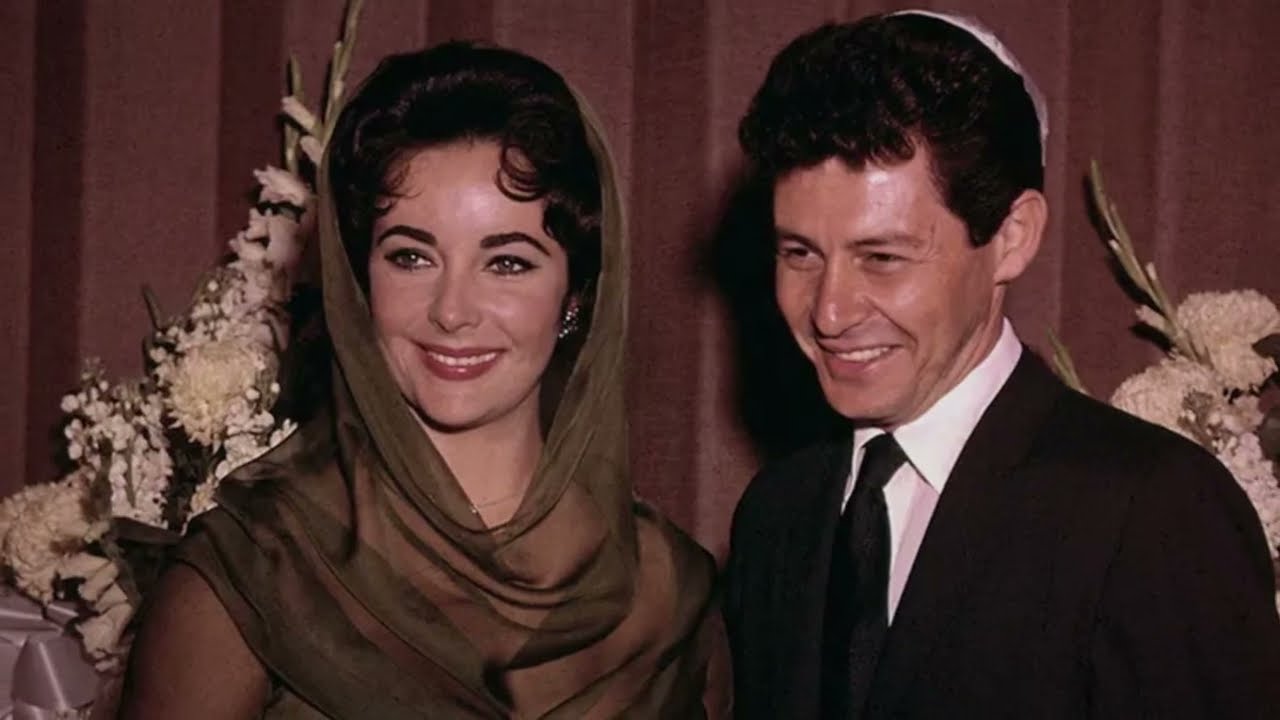 Taylor, upon receiving word of his passing, sent flowers and then locked herself away, refusing to attend the funeral. Her decision, which she would later explain in interviews, was born of a fear that her presence would turn his burial into the same kind of global spectacle that had defined their entire life together, a circus of flashbulbs and speculation that she could not bear to impose on his family’s final goodbye. That act of distance at the very end, that refusal to participate in the public theater of his death, says more about the bond between Richard Burton and Elizabeth Taylor than almost anything that happened during their two marriages.
They could not stay together. The intensity, the volatility, the sheer force of their combined personalities made a sustainable domestic life impossible. Yet, they could not, it seems, ever fully let go of each other either.
Theirs was a connection that defied the legal dissolution of their vows, persisting in phone calls, letters, and a shared history that neither could ever truly escape.
This is the story of a man who burned through a prodigious talent chasing a woman the whole world was already watching, and who spent the rest of his life discovering that some people you marry, and some people you never actually leave. Burton’s journey began in the bleak, unforgiving landscape of Pontrhydyfen, a village in the South Wales valleys where the primary industry was coal and the primary destiny for its young men was the pit. His father, a miner, drank heavily and was frequently absent from the daily business of raising his large family.
His mother died when Richard was barely two years old, leaving him to be raised primarily by his older sister Cecilia and her husband in a household stretched thin by the demands of a large family and the harsh economics of a pre-war mining town. The world he entered offered almost nothing in the way of advantage. It was a world of poverty, of hard labor, and of limited horizons, a world that would have claimed him entirely had it not been for a single, transformative intervention.
That intervention came in the form of a teacher named Philip Burton, an English master at the local grammar school who recognized in the teenage Richard Jenkins a combination of natural intelligence, a striking and powerful voice, and a hunger that set him apart from his peers. Philip Burton took an interest in the boy that went far beyond ordinary classroom instruction, coaching him relentlessly in diction and elocution, working to soften the thick Welsh accent that marked him as a product of the valleys, and eventually becoming his legal guardian. In a deliberate act of reinvention, Richard Jenkins took his mentor’s surname as his own, becoming Richard Burton, a name change that marked the beginning of a lifelong project of self-creation.
The voice, a deep, resonant instrument that colleagues and critics would spend the rest of his career describing in near-reverent terms, became his way out of the valley, his ticket to a world of privilege and polish entirely foreign to the one he had grown up in.
Philip Burton secured him a place at Oxford through a special wartime scheme, and though his formal education there lasted only a matter of months before he was called into the Royal Air Force, the experience 𝓮𝔁𝓹𝓸𝓼𝓮𝓭 him to a world he would carry with him and occasionally weaponize for the rest of his life. After serving in the RAF during the final years of the war, Burton emerged in 1947 with his sights set firmly on acting. His stage career began in earnest in the late 1940s with a series of roles in London that quickly established him as one of the most promising young actors of his generation.
Critics frequently reached for comparisons to Laurence Olivier, then the unquestioned standard for British classical actors, a comparison that followed Burton for the rest of his career. His voice, the same instrument Philip Burton had spent years training, became his signature, capable of filling a theater without apparent effort and of investing even ordinary dialogue with a kind of weight that made audiences lean forward. In 1949, Burton married Sybil Williams, a Welsh actress he had met through the theater world, a marriage that by most accounts began as a genuine partnership rooted in shared background and mutual ambition.
The couple had two daughters, Kate and Jessica, the latter diagnosed in early childhood with a severe developmental condition that would require lifelong institutional care, a private sorrow that Burton rarely discussed publicly but that friends described as a source of considerable, largely unspoken grief.
Burton’s reputation grew steadily through a series of acclaimed stage performances across the 1950s, including celebrated turns with the Old Vic that cemented his standing among the top tier of British classical actors. Hollywood took notice, and Burton found himself drawn, somewhat reluctantly by his own later accounts, into film work that paid considerably more than the stage but that he privately regarded as a lesser form of the craft he had spent years mastering. His early film roles, including a notable turn in 1952’s My Cousin Rachel, which earned him an Academy Award nomination, and a prominent part in 1953’s The Robe, established him as a bankable screen presence even as he continued to insist that the theater remained his true artistic home.
This tension between the financial rewards of Hollywood and the artistic credibility of the stage would define much of his career, and it set the stage for a pattern that became increasingly pronounced as the decade wore on. A brilliant, classically trained actor drawn by money and visibility into an industry he professed, often loudly, holding something close to contempt. Colleagues from this period describe a man already prone to heavy drinking, a habit common enough within the theatrical and film circles he moved through that it rarely drew special comment at the time, but one that would, over the following decades, escalate from a professional quirk into something considerably more destructive.
By the start of the 1960s, Burton had built a reputation as both an exceptional talent and a notoriously restless one, a man capable of devastating, critically lauded performances who nonetheless seemed perpetually dissatisfied with whatever project he was currently engaged in. His marriage to Sybil, by most accounts stable through the 1950s despite Burton’s well-known history of affairs with various costars, remained intact heading into 1962, the year that would change the trajectory of his entire life. That year, Burton was cast in a production so troubled, so expensive, and so thoroughly covered by the world’s press that it would have been a major story regardless of who starred in it.
The fact that his costar was already independently one of the most famous women on Earth turned what might have been an ordinary professional engagement into the defining event of both of their lives. By 1962, Elizabeth Taylor was already a global phenomenon in her own right, a former child star who had grown into one of the most recognizable and highest-paid actresses in the world, her personal life having generated nearly as much press coverage as her film career. She had been married three times by this point, first to hotel heir Conrad Hilton, then to actor Michael Wilding, and then to showman Mike Todd, whose death in a plane crash in 1958 had made Taylor, at 26, a widow with three young children.
Her fourth marriage to singer Eddie Fisher had itself begun in 𝒔𝒄𝒂𝓃𝒹𝒶𝓁, since Fisher had left his wife, the actress Debbie Reynolds, for Taylor shortly after Todd’s death, a pairing the press had framed at the time as a betrayal of America’s wholesome sweetheart, casting Taylor in the role of homewrecker years before the much larger 𝒔𝒄𝒂𝓃𝒹𝒶𝓁 that would actually define that reputation.
Taylor had been cast as the lead in an enormously ambitious production of Cleopatra, a film whose budget had ballooned to such an extent, plagued by production delays, location changes from London to Rome, and a near-fatal illness that struck Taylor early in filming, requiring an emergency tracheotomy, that it threatened at various points to bankrupt the studio financing it. By the time production resumed in Rome in 1962, the film had already become one of the most expensive and most closely watched productions in Hollywood history. Burton was cast as Mark Antony, a role that placed him opposite Taylor for the bulk of the film’s second half, and the two began working together on set in early 1962.
 What happened next has been recounted in dozens of biographies, magazine profiles, and the participants’ own later interviews with broadly consistent details, even as the precise emotional texture of those early weeks remains, inevitably, a matter of interpretation. Both Burton and Taylor were married to other people at the time. Both, by their own later accounts and the accounts of people who observed them on set, found something in each other almost immediately that neither seemed able or particularly inclined to resist.
Crew members and journalists stationed in Rome to cover the already newsworthy production began noticing the chemistry between the two stars within weeks of Burton’s arrival, an attraction that quickly moved from professional rapport into something considerably more difficult to disguise on a set crowded with cast, crew, and an unusually large contingent of international press.
The 𝒶𝒻𝒻𝒶𝒾𝓇 accelerated through the spring of 1962, conducted with a degree of public visibility that made genuine secrecy essentially impossible given the press presence already camped around the production. Reporters photographed the two together at restaurants and social gatherings around Rome, coverage that initially treated the relationship with a degree of coy suggestion before escalating, as the 𝒶𝒻𝒻𝒶𝒾𝓇 became undeniable, into far more direct reporting. Eddie Fisher, Taylor’s husband, traveled to Rome at one point during this period in an attempt to address what he had begun hearing, encounters that by most descriptions did little to slow whatever was developing between Burton and Taylor.
For Burton, the situation represented a genuine departure from his established pattern of affairs, which had typically remained contained, eventually fading without seriously threatening his marriage to Sybil. Friends and colleagues who knew him during this period described a man who seemed, for perhaps the first time in his adult life, genuinely uncertain of his own footing, caught between an established domestic life he had built over more than a decade and an attraction to Taylor that he himself, by later accounts, found both exhilarating and somewhat alarming in its intensity. By the time Cleopatra finished principal photography in the summer of 1962, both Burton’s marriage and Taylor’s marriage existed in a state that nearly everyone involved understood to be effectively over, even though neither divorce had yet been formally initiated.
What had begun as an on-set 𝒶𝒻𝒻𝒶𝒾𝓇 between two married stars of an enormously expensive, already newsworthy film had, by the time the cameras stopped rolling, become something the international press had already begun referring to by a name that would follow Burton and Taylor for the rest of their lives together: Le Scandale.
The press response to the 𝒶𝒻𝒻𝒶𝒾𝓇, once it moved from rumor to confirmed fact, exceeded almost anything either star had previously experienced. Newspapers across the United States and Europe covered the unfolding story with the kind of sustained, obsessive attention usually reserved for major political events, dispatching reporters to Rome specifically to track the couple’s movements and publishing daily updates on the state of both marriages. The 𝒔𝒄𝒂𝓃𝒹𝒶𝓁 reached an extraordinary level of cultural penetration when, in April of 1962, a Vatican-affiliated publication published an open letter addressed to Taylor criticizing her conduct in terms that accused her of what the letter’s author termed “erotic vagrancy,” a phrase that was quickly picked up and repeated by news outlets around the world, cementing the 𝒶𝒻𝒻𝒶𝒾𝓇’s status as not merely a celebrity 𝒔𝒄𝒂𝓃𝒹𝒶𝓁 but a genuine moral controversy being litigated in public by institutions far removed from Hollywood.
American politicians weighed in as well, with at least one member of Congress reportedly raising concerns on the floor of the House about the example being set by the 𝒶𝒻𝒻𝒶𝒾𝓇. For Taylor, the public reaction carried a particular sting given the trajectory of her recent public image. She had spent the years following Mike Todd’s death cast largely in sympathetic terms, a young widow left to raise three children alone.
The Burton 𝒔𝒄𝒂𝓃𝒹𝒶𝓁 revived and intensified that earlier characterization with much of the press explicitly drawing the parallel. Taylor, once again, was being framed as the woman who broke up a marriage. Burton, by contrast, faced a notably different quality of scrutiny.
While his conduct was certainly covered and criticized, the press coverage of the era reflected the broader double standard common to the period, treating a husband’s infidelity as a regrettable but almost expected failing, while treating Taylor’s role in the same 𝒶𝒻𝒻𝒶𝒾𝓇 as evidence of a deeper, more damning character flaw.
The professional consequences for both stars proved, in the end, considerably less severe than either the moral outrage of the period or their own private anxieties might have predicted. Cleopatra was finally released in 1963, more than a year after filming concluded, arriving in theaters as one of the most expensive films ever made and generating significant box office interest, driven in no small part by public curiosity about the off-screen 𝒹𝓇𝒶𝓂𝒶 that had accompanied its production. The divorces that followed proceeded on separate but overlapping timelines.
Sybil Burton, who had attempted reconciliation efforts throughout much of 1962, eventually accepted that the marriage could not be salvaged, finalizing her divorce from Burton in late 1963. The settlement was reportedly substantial, reflecting both Burton’s by then considerable earnings and a recognition of the public humiliation Sybil had endured. Taylor’s divorce from Eddie Fisher followed a similarly public and similarly bitter trajectory, finalized in 1964.
By the time both divorces were finalized, Burton and Taylor had already spent more than a year living together in various locations around Europe, conducting their relationship with a degree of openness that reflected a couple who had largely stopped attempting to manage public perception and had instead settled into the role the press had already assigned them: the world’s most famous, most controversial, and most closely watched couple.
Richard Burton and Elizabeth Taylor married on March 15, 1964, in a private ceremony in Montreal, Canada, just 10 days after Taylor’s divorce from Eddie Fisher became final. The wedding itself was modest by the standards of the spectacle that would come to define their public life together. That restraint did not last long.
Within months, Burton and Taylor had become not merely a celebrity couple but something closer to a global brand, their combined fame generating a level of commercial and cultural visibility that neither had achieved separately. The couple worked together on numerous films throughout the mid and late 1960s, a professional partnership that proved, at least commercially, remarkably successful. Their most critically celebrated joint project, Who’s Afraid of Virginia Woolf?
, released in 1966, cast the couple as a bitter, alcohol-soaked married couple locked in vicious psychological combat, a role that drew so heavily on the public’s perception of their own volatile relationship that critics and audiences alike struggled to separate the performance from what they assumed, not entirely without justification, about the Burtons’ actual marriage. Taylor won her second Academy Award for the role, and the film’s success cemented the couple’s status as a genuine artistic partnership, rather than merely a tabloid pairing. Their lifestyle during these years became a defining feature of their public identity, arguably as significant to their fame as their film work.
 Burton’s earnings, already substantial from his film career, grew dramatically once paired with Taylor’s own considerable salary, and the couple spent with a lavishness that became its own recurring news story. Burton purchased a series of extraordinary jewels for Taylor throughout the marriage, most famously the Krupp diamond, a 33-carat stone he bought in 1968 for roughly $300,000, and later in 1969 what became known as the Taylor-Burton diamond, a 69-carat stone he acquired for just over $1 million after losing an initial bidding war for it at auction, and then purchasing it directly from the winning bidder. The couple also owned a private yacht, the Kalizma, named after Burton’s daughter Kate and Taylor’s daughter Liza, along with Maria, the daughter the couple had jointly adopted in 1964, alongside a private jet and a string of properties across multiple countries.
Beneath the surface of this golden period, however, the same patterns that had complicated both of their previous relationships were already beginning to reassert themselves, now amplified by the scale of fame and wealth the marriage had achieved. Burton’s drinking, a habit that had been a known but manageable feature of his professional life since his early stage career, escalated considerably during these years, fueled by the constant social demands of their lifestyle and by what several biographers have since characterized as a growing personal unease with the gap between the serious classical actor he had once aspired to be and the increasingly commercial, headline-driven film career he now found himself pursuing largely in tandem with his wife’s own celebrity. Taylor, too, struggled with her own health issues throughout this period, complicated by a long history of medical problems dating back to injuries sustained during her child acting years.
Friends and colleagues who observed the couple closely during the mid-1960s described a relationship genuinely passionate in ways that went beyond the performance the public consumed through magazine profiles and film roles, but also one increasingly marked by volatility, public arguments, and a competitive dynamic between two enormously talented, enormously famous people each accustomed before their marriage to being the most significant person in any room they entered. That dynamic, manageable during the early years of their partnership when the novelty and intensity of their connection still dominated, would, over the following decade, increasingly curdle into the kind of conflict that had once seemed confined to their on-screen performances together. But that was, by the early 1970s, becoming a defining and exhausting feature of their actual marriage.
By the late 1960s and into the early 1970s, the qualities that had made Burton and Taylor’s relationship so compelling to the public, the intensity, the volatility, the sense of two enormous personalities locked in permanent negotiation with each other, had begun exacting a serious toll on both of them individually and on the marriage itself. Burton’s drinking, which had escalated steadily since the early years of their relationship, reached levels by the early 1970s that friends, colleagues, and eventually Burton himself, in later interviews and in diary entries published after his death, described as genuinely alarming, with daily consumption that by some accounts approached a quart of hard liquor on his heaviest days. The effect on his career proved significant.
While Burton continued working steadily throughout this period, the quality and critical reception of his film output declined noticeably from the heights of the mid-1960s, with several projects from this era widely regarded, even at the time, as beneath the talent he had demonstrated on stage and in his earlier film work. Critics and colleagues increasingly attributed this decline directly to his drinking, along with what several biographers have characterized as a kind of creative restlessness that had plagued him since his earliest Hollywood years, a tendency to accept projects based primarily on financial terms rather than artistic merit. Taylor, too, faced her own struggles during this period, compounded by ongoing health problems that required repeated surgeries and hospitalizations throughout the marriage, along with her own well-documented difficulties with alcohol, a habit she shared with Burton, and that several accounts suggest the two enabled in each other rather than helping one another manage.
The couple’s public arguments, increasingly difficult to keep entirely private given the press attention that followed them virtually everywhere, became their own subject of fascination for entertainment journalists who covered the fights with nearly as much enthusiasm as they had once covered the romance that brought the couple together in the first place. Burton’s own writings from this period, including diary entries that would not become publicly available until decades after his death, reveal a man acutely aware of his own decline, capable of remarkable self-criticism about both his drinking and his professional choices, even as he appeared, by the accounts of those around him, largely unable to break the patterns he recognized and described with such clarity in his private reflections.
By 1973, the strain had become impossible to manage privately any longer. Reports of a separation began circulating in the press that summer, met initially with the kind of skepticism that had greeted similar rumors throughout the marriage, given how frequently Burton and Taylor’s volatile public arguments had previously been followed by equally public reconciliations. This time, however, the separation proved different in both its severity and its eventual permanence.
Taylor issued a statement that summer acknowledging the difficulties in the marriage, language that, while characteristically guarded about specifics, represented a more direct public acknowledgment of serious trouble than either party had previously offered. The months that followed brought a level of scrutiny to the couple’s private lives that, remarkably, exceeded even the coverage that had accompanied the original 𝒔𝒄𝒂𝓃𝒹𝒶𝓁 more than a decade earlier. This period also coincided with a broader shift in how the entertainment press operated, as the older studio system model of tightly managed celebrity coverage gave way to an increasingly independent and aggressive tabloid culture.
In 1974, Burton suffered a serious health crisis directly attributable to his drinking, a frightening enough episode that it prompted, at least temporarily, a period of genuine sobriety. Accounts of the episode described symptoms consistent with severe alcohol withdrawal, including violent shaking and disorientation severe enough that those present feared for his life in the immediate aftermath. Taylor, during this same period, began a relationship with Henry Wynberg, a Dutch-born businessman she had met through mutual friends following her separation from Burton, a relationship that received considerable press attention as the first clear public sign that Taylor herself viewed the marriage as genuinely over.
The divorce was finalized in June of 1974, ending a marriage that had defined entertainment coverage for the better part of a decade.
What surprised many observers in the months immediately following the divorce was how quickly and how persistently Burton and Taylor remained in contact with each other, a pattern that diverged sharply from the typical post-divorce trajectory of celebrity couples. Friends close to both parties described continued phone calls, occasional meetings, and a level of emotional entanglement that suggested, even to people who knew them well, that whatever had driven them apart had not actually resolved the underlying attraction and connection that had brought them together in Rome more than a decade earlier. That continued connection would, within little more than a year, produce one of the more surprising developments in either of their already eventful personal histories, a second marriage to each other, conducted with considerably less fanfare than the first, but met with no less public fascination.
Burton and Taylor remarried on October 10, 1975, in a private ceremony in Chobe National Park in Botswana, a setting that contrasted sharply with both the modest Montreal wedding of 1964 and the international spectacle that had surrounded their original courtship. The ceremony itself was reportedly attended by only a handful of people, conducted in a remote setting deliberately chosen to keep the press at bay. Taylor reportedly wore a simple green dress, rather than anything resembling formal bridal attire, a deliberate departure from the elaborate presentation that had characterized so much of her public image throughout her career.
The second marriage, however, proved considerably shorter and more troubled than the first, lasting less than a year before the same underlying patterns, Burton’s drinking, the volatility, the difficulty either party seemed to have in fully accommodating the other’s needs and temperament, reasserted themselves with enough force to make a second divorce essentially inevitable. By mid-1976, the couple had separated again, and their second divorce was finalized in July of that year, formally ending the marital relationship between Burton and Taylor for the final time.
Unlike the first divorce, which had been followed within roughly 18 months by reconciliation and remarriage, this second separation proved permanent in terms of the formal legal relationship between them, even as the deeper personal connection that had repeatedly drawn them back to each other never entirely disappeared. In the months following the second divorce, both Burton and Taylor moved relatively quickly into new relationships. Burton married Susan Hunt, the former wife of the racing driver James Hunt, in 1976, a marriage that lasted until 1982.
Taylor would go on to marry twice more in the years that followed, first to politician John Warner in 1976 and later to construction worker Larry Fortensky in 1991. What persisted, despite two divorces and despite both parties moving into other marriages, was a connection between Burton and Taylor that friends, biographers, and the two of them in their own later sparse public comments consistently described as never having fully dissolved. They remained in periodic contact throughout the years that followed, exchanging letters and occasional phone calls, a pattern that several people close to both of them interpreted as evidence that whatever had originally drawn them together in Rome in 1962 had never been fully resolved by either marriage or either divorce.
 The years following his second divorce from Taylor brought Burton a degree of professional and personal stability that had often eluded him during the peak years of his fame, even as his health continued to bear the cumulative weight of decades of heavy drinking. His marriage to Susan Hunt brought him into contact with an entirely different social world than the one he had inhabited with Taylor, and friends who knew the couple during these years described Susan as a steadying presence in Burton’s life. This period coincided with a renewed focus on his stage and film career, including a celebrated return to Broadway in Equus in 1976, a performance that critics widely praised as a reminder of the formidable talent that had first established his reputation decades earlier.
Those who knew Burton during this later period frequently pointed to his private intellectual life as the truest expression of who he actually was beneath the decades of tabloid coverage. Burton had remained throughout his adult life a voracious reader, capable by most accounts of reciting enormous stretches of Shakespeare and the poetry of his fellow Welshman Dylan Thomas entirely from memory. He kept extensive diaries throughout much of his adult life, a habit that produced by the time of his death a substantial private record of his own thinking about his career, his marriages, and his ongoing struggle with alcohol.
Burton’s drinking, however, remained a persistent struggle throughout these years, with periods of sobriety repeatedly giving way to relapse. His marriage to Susan Hunt ended in divorce in 1982, a separation that, unlike the public spectacle of his marriages to Taylor, generated comparatively modest press attention. The following year, Burton married Sally Hay, a television production assistant considerably younger than him whom he had met while filming a television production in the early 1980s.
A marriage that those close to him during this final period described as bringing a degree of calm and genuine sobriety that had largely eluded him during his previous relationships. By most accounts, Burton achieved sustained abstinence from alcohol during these final years with Sally Hay, a hard-won stability that arrived with a kind of grim irony common to addiction only in the final months of his life.
One of the more striking episodes of this final period arrived in 1983 when Burton and Taylor appeared together on Broadway in a production of Noel Coward’s Private Lives, a play centered on a divorced couple who encounter each other again years later while honeymooning with their respective new spouses, a plot whose ironic parallels to Burton and Taylor’s own history were not lost on critics, audiences, or by most accounts, the two stars themselves. The production drew enormous public interest with tickets selling briskly on the strength of the pairing alone. Reviews of the production itself were notably more mixed than the box office response, with several critics suggesting that the performances, while charged with an unmistakable, lived-in chemistry that no amount of conventional rehearsal could have manufactured, never quite rose to the level of disciplined craft that both performers individually had demonstrated at earlier points in their careers.
Tabloids covering the run devoted considerable attention to backstage reports of the two stars’ interactions, with persistent rumors circulating throughout the engagement that a third marriage might follow. Speculation that neither Burton, by then married to Sally Hay, nor Taylor ever encouraged, though neither fully extinguished it either, content, by most accounts, to let the public’s enduring fascination with their pairing play out on its own terms one final time. Professionally, Burton’s later career included a number of notable projects that critics regarded as a genuine return to form, including his performance in the 1984 film adaptation of George Orwell’s 1984, in which he played the chillingly composed interrogator O’Brien.
Released shortly after his death and widely praised as one of the finest performances of his later career, a role that several critics noted drew on exactly the qualities, restraint, vocal control, and unsettling stillness that had marked his greatest stage work decades earlier. Across his entire body of work, Burton received seven Academy Award nominations without ever winning, a statistic frequently cited by critics and biographers as one of the more notable oversights in the Academy’s history.
On August 5, 1984, Burton died suddenly at his home in Celigny, Switzerland, the victim of a cerebral hemorrhage at the age of 58. He had complained of headaches in the days preceding his death, but had given no indication, by the accounts of those closest to him, of any crisis severe enough to suggest the sudden and complete nature of what followed. Medical accounts of his death note that a lifetime of heavy alcohol consumption is a recognized contributing factor to the kind of cerebrovascular event that killed him, even though, by the time it occurred, he had been largely sober for nearly two years.
A cruel reminder that the physical damage accumulated during decades of drinking does not necessarily reverse itself even once the drinking stops. He died in his sleep, found the following morning by his wife, a death that, for all the decades of public 𝒹𝓇𝒶𝓂𝒶 that had preceded it, arrived with a kind of quiet finality that contrasted sharply with the operatic scale of nearly everything else in his adult life. His funeral, held in Celigny in the days following his death, was a relatively modest, private 𝒶𝒻𝒻𝒶𝒾𝓇 attended by family and close friends, including Sally Hay and members of his large, extended Welsh family, conducted with a deliberate restraint that stood in contrast to the public spectacle that had defined so much of his life.
He was buried in the small cemetery in Celigny, and according to several accounts that circulated afterward, a copy of the collected works of Dylan Thomas, the Welsh poet whose work Burton had loved and recited since his earliest years under Philip Burton’s instruction, was placed in his coffin, a quiet, deeply personal gesture that tied his final resting place back to the language and the landscape of the valley where his story had begun nearly 60 years earlier.
News of his death traveled quickly to Los Angeles, where Taylor, by her own and others’ later accounts, was devastated, a grief that friends described as profound, despite the years that had passed since their second divorce, and despite both of their subsequent marriages to other people. Taylor chose not to attend Burton’s funeral, a decision she later explained in various interviews given over the following years as motivated by a desire to avoid turning the funeral into the kind of media spectacle her presence would almost certainly have generated, an acknowledgement of exactly the dynamic that had followed both of them throughout their relationship, and that she did not want to impose on his family during their private grief. She visited his grave privately on a later occasion, away from the press attention that had accompanied virtually every other significant moment of their shared history.
In the years that followed his death, Taylor’s own life took on a new dimension that several biographers have connected, at least loosely, to the losses she had already endured by that point in her life, including Burton’s death the year before her close friend Rock Hudson’s death from AIDS-related illness in 1985, a loss that prompted Taylor to become one of the earliest and most prominent celebrity advocates for AIDS research and awareness. Wales itself never relinquished its claim on Burton in the decades following his death, treating him as one of the defining cultural figures the country produced in the 20th century, despite the decades he had spent almost entirely outside it. Swansea University established an archive dedicated to his papers and personal effects, drawing researchers and biographers seeking to understand the gap between the public spectacle of his marriages and the considerably more private, literary, and restless man his diaries and letters revealed.
Taylor spoke about Burton periodically in interviews throughout the remainder of her own life, insistently describing him in terms that suggested the connection between them had never fully faded despite everything that had ultimately kept them apart. Burton’s own diaries, published decades after his death, offered a remarkably candid private account of his years with Taylor, revealing a man who, even during the most difficult stretches of their relationship, continued to describe his feelings for her in terms of a depth and intensity that went considerably beyond what either of them had typically expressed in public.
What the full record of their relationship ultimately suggests is something more complicated than either a simple love story or a cautionary tale about the corrosive effects of fame and excess, though it contains genuine elements of both. Burton was, by nearly every account, one of the most naturally gifted actors of his generation, a talent that fame, wealth, and addiction repeatedly threatened to waste and that he himself, in his most honest private reflections, recognized as imperiled even as he struggled for decades to fully address the habits undermining it. His relationship with Taylor accelerated both the heights and the costs of that fame, giving him access to a scale of wealth and visibility his earlier stage career alone could never have provided, while also drawing him deeper into the kind of public spectacle and personal volatility that by his own later assessment had cost him a measure of the artistic seriousness he had once aspired to above all else.
The title attached to his story, the man who could not leave Elizabeth Taylor, captures something true even if it oversimplifies a genuinely complicated history. Burton did leave Taylor twice, through two divorces conducted with the same public intensity that had characterized everything else about their relationship. But neither divorce, it seems, ever fully resolved whatever had originally drawn a Welsh miner’s son and the most famous woman in the world together on a chaotic film set in Rome in 1962.
A connection that persisted in diminished, complicated form through letters and phone calls and occasional private visits for the rest of his life, ending only with his death. And even then, not entirely, in the grief Taylor carried for him for years afterward, long after either of them had any formal claim left on the other.