James Garner, the beloved star of Maverick and The Rockford Files, carried a quiet truth about his longtime co-star Jack Elam to his grave—and only revealed it in his final years. For decades, fans assumed their on-screen chemistry in Western comedies like Support Your Local Sheriff masked a hidden rift, especially after Elam’s death in 2003 left Garner conspicuously silent. But in a rare, reflective moment before his own passing in 2014, Garner shattered those assumptions with a confession that redefined their bond: he had always admired Elam, not just as an actor, but as a man whose kindness behind the scenes rivaled his wild on-screen persona.
The revelation, captured in a video transcript now circulating among Hollywood historians, offers a poignant glimpse into a friendship that thrived away from the spotlight—and a legacy built on mutual respect rather than rivalry.
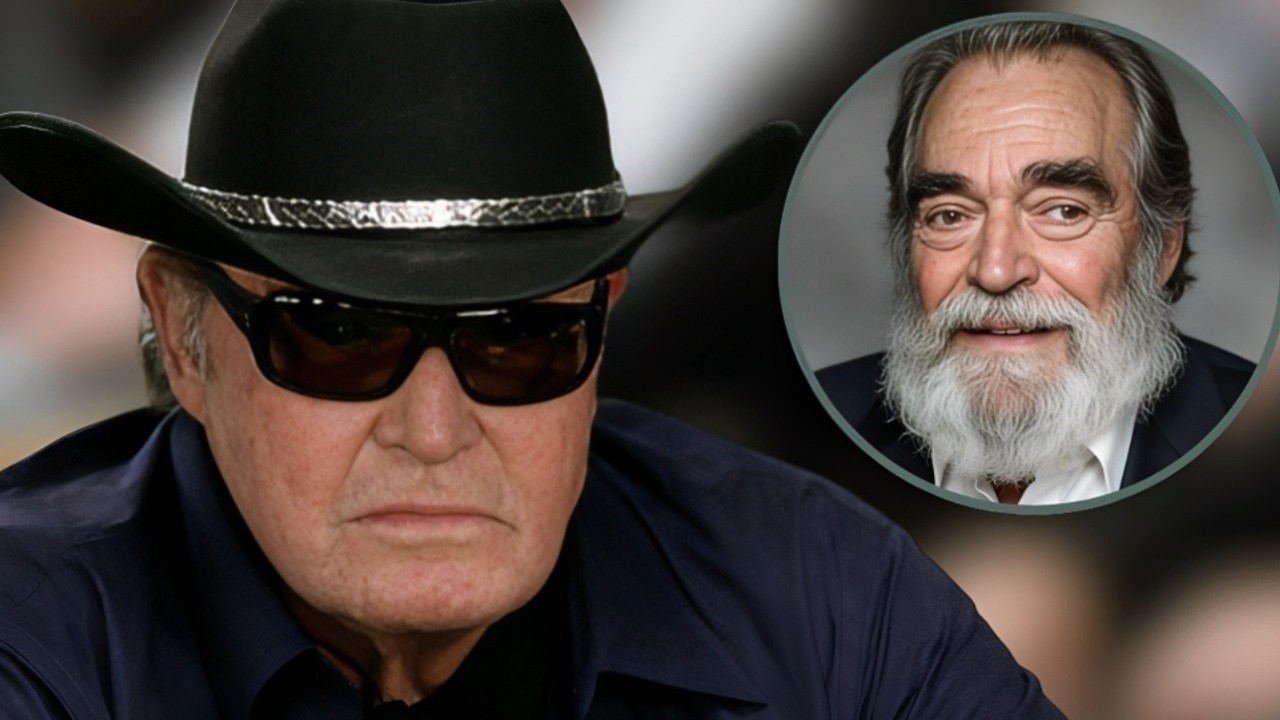 Garner’s silence after Elam’s death was never a sign of distance, he explained, but a belief that true friendship doesn’t need public validation. He recalled Elam as “one of Hollywood’s most original actors,” a man who could turn a two-line role into a scene-stealing masterpiece through sheer timing and authenticity. Yet what struck Garner most was the private Jack Elam—the one who quietly mentored struggling young actors on set, offering advice without ever seeking credit.
These moments, Garner insisted, revealed a character that audiences never saw, and they were the foundation of a respect that spanned decades of collaboration.
The two actors first shared the screen in the 1969 classic Support Your Local Sheriff, where Garner’s laid-back confidence perfectly countered Elam’s unpredictable energy. Their dynamic—Garner the calm, witty hero; Elam the unhinged but oddly charming villain—became a template for Western comedy, drawing audiences who craved humor over grit. They reunited in Support Your Local Gunfighter (1971), cementing their status as an unforgettable duo.
But while their characters clashed with comedic tension, Garner later revealed that off-camera, Elam was a stabilizing presence, a man who used his distinctive misaligned eye—often his calling card—not as a crutch but as a tool to command attention and disarm co-stars with self-deprecating humor.
Born in Oklahoma in 1928, Garner’s path to stardom was forged in hardship. He lost his mother at age five, grew up during the Great Depression, and served in the Korean War, where he earned two Purple Hearts for wounds sustained in combat. That resilience shaped his approach to acting—he rejected the swaggering, violent archetype of Western heroes in favor of intelligence and charm, a choice that made him a cultural icon.
Elam, by contrast, built his career on his unconventional looks, transforming what could have been a limitation into a trademark that made him the go-to actor for outlaws and gunslingers across three decades of film and television.
Their partnership was more than professional; it was a study in complementary opposites. Garner’s relaxed, everyman appeal balanced Elam’s explosive unpredictability, creating a tension that felt both authentic and hilarious. In Support Your Local Sheriff, Elam’s character, Jake, provided the perfect foil to Garner’s Jason McCullough, a marshal who preferred wit over violence.
The film’s success spawned a sequel, and their scenes together became fan favorites, replayed in Western marathons for generations. Yet Garner’s later reflections suggest that the magic on screen was a direct result of the trust they built off it—a trust that required no grand gestures, only consistent professionalism and a shared love for their craft.
When Elam died in 2003 at age 82, the entertainment world mourned a character actor whose face was as memorable as his performances. Garner, however, remained publicly muted, a choice that puzzled fans and fueled speculation about a falling out. Some theorized that Garner, known for his integrity, had clashed with Elam’s chaotic on-set antics.
Others whispered about jealousy over Elam’s scene-stealing abilities. But Garner’s posthumous revelations, shared in interviews before his death, dismissed these rumors as “further from the truth” than anyone could imagine. He explained that his silence was a matter of principle—he didn’t believe in airing private relationships for public consumption, especially when those relationships were built on subtle, unspoken bonds.
Garner’s admiration for Elam extended beyond their collaborations. He noted that Elam’s career was a masterclass in reinvention—starting as a real-life accountant and even a boxer before a chance encounter with actor Stanley Clements led him to Hollywood. Elam’s first film role was uncredited, but he quickly carved a niche in Westerns, appearing in classics like High Noon (1952) and The Man from Laramie (1955).
His eye, damaged in a childhood accident, became his signature, but Garner emphasized that Elam never let it define him. Instead, he used it to create characters that were simultaneously menacing and endearing, a duality that made him indispensable to directors like Sam Peckinpah and John Sturges.
 The depth of Garner’s feelings came into focus when he recalled specific moments on set. He described watching Elam take aside a nervous young actor during a tense scene, offering gentle pointers on timing and delivery. Elam never raised his voice or sought credit; he simply helped, then returned to his own role as if nothing had happened.
These acts of quiet mentorship, Garner said, were the true measure of the man—far more telling than any award or headline. In an industry often defined by ego and competition, Elam’s generosity stood out, and Garner carried that lesson with him for the rest of his life.
Garner also admitted regret that he hadn’t spoken more openly about his admiration while Elam was alive. He wished he had told his co-star directly how much he valued their partnership, not just for the films they made but for the friendship they shared. This confession, delivered with characteristic humility, added a layer of poignancy to their story.
It suggested that even the most secure relationships can harbor unspoken words, and that timing matters in expressing gratitude. Garner’s honesty in his final years served as a reminder that legacies are often shaped by what we say—and what we leave unsaid.
Their story resonates today because it challenges the narrative that Hollywood is built on backstabbing and rivalry. Garner and Elam’s bond was a counterpoint, a testament to the power of quiet consistency and shared values. They didn’t need to broadcast their friendship to make it real; they simply showed up, did exceptional work, and respected each other’s craft.
That approach, Garner implied, was the secret to their enduring appeal. Audiences sensed the authenticity in their interactions, even if they couldn’t articulate why. The laughter they provoked was genuine, rooted in a mutual understanding that transcended the script.
Elam’s legacy, as Garner saw it, was not just his filmography but his impact on those who worked with him. He was a mentor, a professional, and a friend—qualities that Garner believed were more valuable than any accolade. In an era when Westerns dominated American cinema, Elam stood out as a reminder that character actors were the backbone of the genre, providing the texture and depth that made heroes shine.
Garner’s reflections honored that contribution, elevating Elam from a supporting player to a foundational figure in Hollywood’s golden age.
The video transcript that captured Garner’s thoughts has since become a touchstone for fans and historians alike. It offers a rare, unfiltered look at how two legends viewed each other, free from the spin of publicists or the distortion of time. Garner’s words—measured, sincere, and devoid of sensationalism—paint a portrait of a man who valued substance over spectacle.
He didn’t need to manufacture 𝒹𝓇𝒶𝓂𝒶 to make their story compelling; the truth was enough. And in that truth, we find a lesson about friendship, humility, and the quiet bonds that sustain us through careers and life.
As the years pass, the films Garner and Elam made together remain staples of classic Western television, their humor as fresh today as it was in the 1970s. Support Your Local Sheriff is often cited as one of the genre’s best comedies, a film that works because of the trust between its leads. Elam’s performance as the bumbling outlaw Jake is a masterclass in physical comedy, while Garner’s deadpan delivery grounds the chaos.
 Their partnership proved that comedy and Westerns were not mutually exclusive—they could coexist, creating a subgenre that delighted audiences and influenced countless imitators.
Garner’s later life was marked by reflection, a period when he looked back on his career with a mixture of pride and humility. He had survived war, personal loss, and the pressures of fame, emerging as a figure of stability in an unstable industry. His marriage to Lois Clarke, which lasted 58 years until his death, was a testament to his commitment, and his reputation as “one of Hollywood’s genuine good guys” was earned through actions, not publicity.
In that context, his words about Elam carry even more weight—they come from a man who understood the value of loyalty and the importance of speaking truth, even when it’s uncomfortable.
The revelation about Garner’s feelings for Elam also sheds light on the nature of their on-screen dynamic. Viewers often assume that chemistry is manufactured, but in this case, it was organic. Garner’s relaxed confidence was not an act; it was his personality, honed by years of overcoming adversity.
Elam’s unpredictability was similarly authentic, a reflection of a man who had reinvented himself multiple times. Together, they created a partnership that felt real because it was real—two professionals who respected each other’s work and enjoyed the process of creating something lasting.
In the end, Garner’s confession is a gift to fans who wondered about the men behind the characters. It humanizes both actors, reminding us that their legacies are not just about the roles they played but about how they treated each other. Garner’s wish that he had spoken sooner is a poignant reminder of our own mortality and the importance of expressing appreciation while we can.
His words, though delivered posthumously, have the power to inspire—not just for their content, but for their tone, which is free of bitterness and full of grace.
The story of James Garner and Jack Elam is a counter-narrative to the cynicism that often surrounds celebrity culture. It shows that two men, from vastly different backgrounds, could find common ground in their craft and build a bond that outlasted their careers. Garner, the war hero and everyman, and Elam, the character actor with the unforgettable face, were unlikely friends, but their friendship was real.
And in a world that thrives on conflict, that reality is refreshing—a reminder that some of Hollywood’s greatest stories are not about feuds, but about the quiet, enduring power of respect.
As we revisit their films today, we do so with new eyes, knowing what Garner revealed. Every glance, every joke, every moment of shared screen time takes on added meaning. We see not just two actors performing, but two friends collaborating, their trust evident in every frame.
That knowledge enriches the viewing experience, transforming nostalgia into something deeper—an appreciation for the human connections that make art possible. Garner’s words ensure that Elam’s memory is not just preserved but celebrated, not just for his talent but for his character.
 The legacy of their partnership extends beyond their own filmography. It serves as a model for future generations of actors, a proof that professionalism and kindness can coexist with success. In an industry that often rewards aggression and self-promotion, Garner and Elam’s approach stands as a quiet rebuke.
They didn’t need to be the loudest voices in the room; they let their work speak for them, and their work spoke volumes. Their story is a testament to the idea that true greatness is often found in the spaces between the spotlight—in the moments of quiet support, the unspoken understanding, the shared commitment to a craft.
Garner’s reflections also invite us to reconsider how we remember celebrities. We often reduce them to their public personas, forgetting that they are complex individuals with private lives and relationships. Garner’s confession humanizes both him and Elam, reminding us that behind the glamour are real people with real feelings.
His admission of regret—that he didn’t speak sooner—is a universal sentiment, one that resonates with anyone who has lost someone and wished they had said more. In that way, his story transcends Hollywood, touching on themes of love, loss, and the importance of connection.
The video transcript that captured Garner’s thoughts has become a valuable historical document, preserving a moment of candor that might otherwise have been lost. It offers a window into the mind of a legend, showing us not just what he thought of Elam, but how he processed his own mortality. Garner’s tone is reflective, almost wistful, as he considers the arc of his career and the people who shaped it.
He speaks of Elam with a warmth that is palpable, his words carrying the weight of years of shared experience. It is a testament to the power of memory and the importance of honoring those who came before us.
As we look back on the golden age of Hollywood, we often focus on the big names, the leading men and women who dominated the screen. But Garner’s story reminds us that the supporting players—the character actors like Elam—were just as vital, providing the texture and depth that made films memorable. Elam’s career spanned over 60 years, with more than 130 credits, and his influence can be seen in generations of actors who followed.
Garner’s tribute ensures that Elam’s contributions are not forgotten, that his legacy is preserved for future fans who may only know him from old Westerns.
In the end, the story of James Garner and Jack Elam is a story about the power of quiet friendship. It’s about two men who found in each other a kindred spirit, a professional ally, and a trusted colleague. It’s about the bonds that form when people share a passion for their work and a commitment to doing it well.
And it’s about the importance of speaking our truths, even when we think it’s too late. Garner’s words, shared before his death, are a final gift—not just to Elam’s memory, but to all of us who value authenticity and connection.
Their films will continue to be watched, their performances celebrated, but now we know the story behind the story. We know that the chemistry on screen was real, that the laughter was genuine, and that the respect was mutual. We know that James Garner, a man of few public words, carried a deep admiration for Jack Elam that he finally shared with the world.
And we know that their legacy is not just one of entertainment, but of humanity—a reminder that even in the glittering world of Hollywood, the most meaningful relationships are often the ones we keep closest to our hearts.