A single photograph can preserve a moment for decades. Put two photographs side by side, separated by more than half a century, and the passage of time becomes much easier to appreciate.
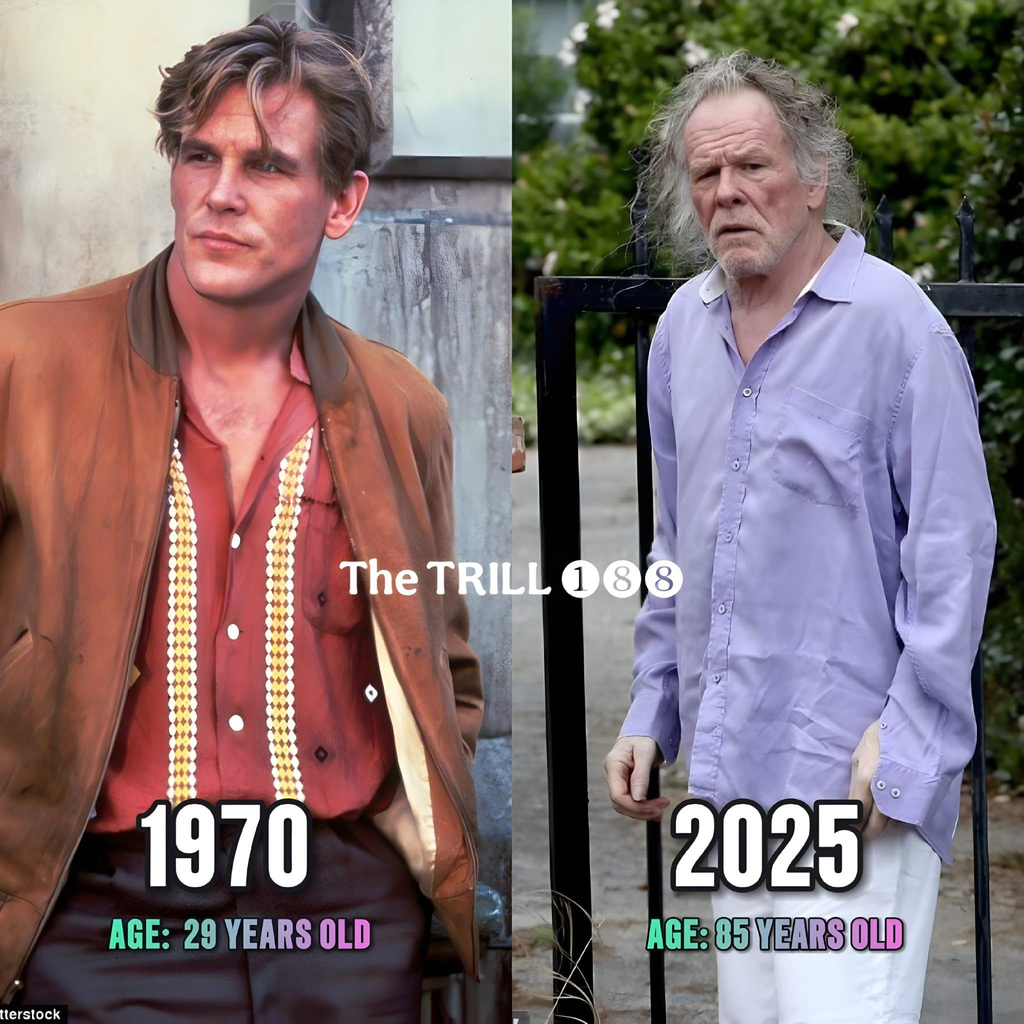
This striking then-and-now comparison places a younger-looking man in a brown jacket beside an older man with long, untidy gray hair, wearing a light purple shirt. The image labels the photographs as 1970 and 2025, inviting viewers to consider the changes that can occur over 55 years.
The contrast is immediately noticeable. The younger portrait features fuller brown hair, a relatively smooth face, and a carefully layered outfit. The older portrait presents a very different appearance, with gray hair, visible facial lines, and a more relaxed style.
But there is more to a comparison like this than the difference between youth and old age. It also raises interesting questions about photography, personal identity, the passage of time, and the way audiences remember familiar faces.
What Makes This Then-and-Now Photograph So Striking?
The first thing viewers notice is the contrast between the two appearances.
In the left-hand photograph, the man wears a brown jacket over a reddish shirt, with decorative patterned suspenders or straps visible down the front. His brown hair falls loosely across his forehead, and his overall appearance reflects a distinctive vintage style.
On the right, the older man has long gray hair, a lined face, and a light purple button-down shirt. His clothing is simpler, and his appearance is less formally styled.
The photographs create an immediate visual comparison without requiring much explanation.
However, an important distinction remains: the image itself does not establish whether both photographs depict the same person, nor does it provide independently verified information about the original dates or locations.
The labels give viewers a starting point, but the original photographic records would be needed to establish the full story.
Why Do People’s Appearances Change Over Time?
Human aging is a gradual process influenced by genetics, environmental exposure, lifestyle, and many other factors. Photographs capture only individual moments in that process.
Hair Color and Texture
One of the most visible differences between the two images is hair color.
Hair commonly becomes gray or white as the production of melanin, the pigment responsible for hair color, decreases with age. The timing and extent of this change vary considerably from person to person.
Hair texture, density, and styling can also change over the decades. Someone who wore a carefully shaped hairstyle in their twenties or thirties may prefer a completely different look later in life.
The contrast between brown hair and long gray hair is particularly noticeable in this image because both hairstyles frame the face differently.
Facial Features and Skin
The younger portrait shows smoother-looking skin, while the older portrait features more visible lines across the forehead and around the eyes.
These differences are consistent with common signs of aging. Skin gradually loses some of its elasticity, and wrinkles may become more pronounced over time.
Nevertheless, photographs cannot tell the complete story of an individual’s health or life experiences. Lighting, camera angle, image quality, and facial expression can all affect how old someone appears.
That is why a visual comparison should not be treated as a medical assessment or a complete account of a person’s life.
Clothing and Personal Style
Fashion also plays an important role in how people perceive the passage of time.
The brown jacket and reddish shirt in the left-hand photograph create a distinctly vintage appearance. The light purple shirt in the right-hand photograph gives the older portrait a different mood.
Clothing choices can change with personal preference, professional requirements, cultural trends, or the circumstances in which a photograph was taken.
A person’s appearance may also be deliberately altered for a performance, a film role, or a theatrical production. Without more information about these photographs, it would be impossible to determine how much of the contrast reflects everyday personal style and how much might reflect a particular role or setting.
Could the Older Man Be Actor Ian McKellen?
The older portrait bears a resemblance to British actor Ian McKellen, known internationally for roles including Gandalf in The Lord of the Rings films and Magneto in the X-Men franchise.
McKellen’s official biography confirms that he was born on May 25, 1939, in Burnley, England. His long career has included extensive work in theatre, film, and television. You can explore his background through his official website.
There is also a documented reason that some photographs of McKellen show him with long, unruly gray hair.
In 2024, he portrayed Falstaff in Shakespeare’s Henry IV, allowing his hair and beard to grow for the role. Photographer Frederic Aranda documented McKellen’s transformation and subsequent haircut in a photographic feature published by LensCulture.
The feature explains that McKellen left the stage production after an accident in June 2024 and later had his hair cut following the production’s final performance in July.
This documented transformation makes McKellen a relevant point of comparison when discussing the older portrait.
However, the resemblance is not sufficient to confirm that the man pictured is McKellen. Nor does the available information establish that the younger portrait depicts the same actor. The original image source and photographic credits would be necessary to verify those identities.
How Acting Can Transform an Actor’s Appearance
Theatre and film often require performers to look substantially different from their everyday selves.
Hair, makeup, facial hair, costumes, and prosthetics can all contribute to a character’s appearance. Some transformations take only a few minutes, while others involve months of preparation or the deliberate growth of hair and facial hair.
For an actor playing a historical character, physical appearance can help communicate the character’s age, personality, social position, and circumstances before the audience hears a single line.
Shakespeare’s Falstaff, for example, is a character whose physical presence and larger-than-life personality are important parts of the theatrical experience.
McKellen’s documented transformation demonstrates how a respected performer can embrace a dramatically different appearance for a role.
It also illustrates why photographs of actors sometimes look very different from the carefully styled promotional portraits audiences remember.
Still, it is important to distinguish a documented theatrical transformation from an ordinary aging comparison. Without confirmation of the people and circumstances shown in the uploaded image, the photographs should not automatically be described as evidence of an actor’s personal transformation.
Why Then-and-Now Photos Continue to Fascinate Us
Photographs preserve appearances that would otherwise exist only in memory.
A picture taken decades ago can show the hairstyle, clothing, and visual culture of its period. A later photograph provides a different reference point, allowing viewers to notice changes that might be less obvious when seen gradually.
These comparisons can also encourage people to think about their own family photographs, old friends, and personal milestones.
For entertainment fans, they offer another kind of fascination: the difference between a performer’s public image and the many stages of a long career.
An actor may become closely associated with a particular film, character, or era. Even when the real person continues to change, the image preserved on screen remains familiar.
That contrast can make a later photograph especially memorable.
Yet every photograph tells only part of a story. A person’s appearance cannot reveal everything about their experiences, relationships, achievements, or feelings. The most responsible interpretation combines visual observation with reliable information about the person and the circumstances surrounding the image.
Frequently Asked Questions
1. What years are shown in the comparison?
The image labels the two portraits as 1970 and 2025, a difference of 55 years. The original photograph dates have not been independently verified.
2. Who is the older man in the photograph?
The older man resembles Ian McKellen, the British actor known for The Lord of the Rings and X-Men. However, the identity cannot be conclusively confirmed from the image alone.
3. Why does gray hair become more common with age?
Hair commonly becomes gray or white as pigment production decreases in hair follicles. Genetics and individual biological differences influence when this happens.
4. Can photographs accurately show how much someone has aged?
Photographs can illustrate visible changes, but lighting, camera angles, image quality, facial expressions, and styling can affect the comparison. Two pictures cannot explain every aspect of a person’s aging process.
5. Why do actors sometimes look very different in public photographs?
Actors may change their hairstyles, grow facial hair, wear costumes, or alter their appearance for theatrical and film roles. Their everyday appearances may therefore differ significantly from their most famous screen images.
Conclusion: A Visual Reminder of the Passage of Time
The comparison between the photographs labeled 1970 and 2025 offers a memorable illustration of how appearances can change over the course of decades.
The differences in hair, facial features, and clothing make the contrast especially striking. The resemblance between the older portrait and Ian McKellen also provides an interesting connection to the world of theatre, where actors sometimes transform their appearances to portray memorable characters.
Nevertheless, the identities and original dates of these particular photographs remain unverified.
That distinction matters because a compelling image deserves an accurate explanation. The most interesting stories are not necessarily the ones with the boldest claims, but the ones that combine visual curiosity with reliable information.
Ultimately, a then-and-now photograph gives us a reason to look closely, remember the past, and appreciate how much a single image can communicate about the passage of time.