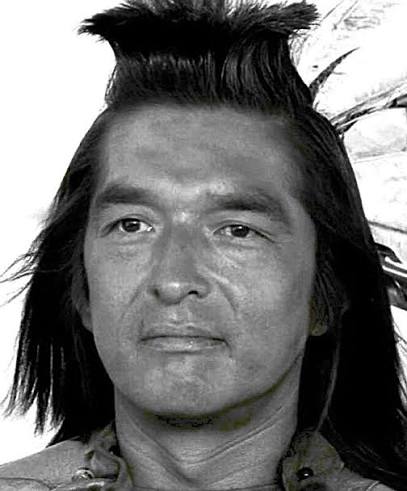
Graham Greene was the kind of actor who never needed to be the loudest person in the room. With a calm presence, a distinctive voice and an ability to communicate emotion with the smallest expression, Greene could make even a short scene unforgettable. For more than five decades, he built a remarkable career across film, television, theater and even video games, becoming one of the most respected Indigenous actors of his generation.See more…
Greene was born on June 22, 1952, in Ohsweken, Ontario, on Canada’s Six Nations Reserve. He was a member of the Oneida Nation. His path to Hollywood was anything but ordinary. Before becoming a professional actor, Greene worked a variety of jobs, including drafting, high-steel work, welding, carpentry and audio engineering. He also worked around the music industry before eventually discovering that acting was the career he wanted to pursue.
His acting career began in Canada during the late 1970s. One of his early television appearances came in the Canadian drama series The Great Detective in 1979, followed by his first movie role in Running Brave in 1983. Rather than immediately becoming a Hollywood star, Greene spent years developing his craft through theater and smaller screen roles. Those years helped shape the quiet, controlled style that would later become one of his trademarks.
Greene also spent time performing theater in Canada and abroad, including work in England. His stage career was an important part of his development as an actor, and he eventually became associated with major Canadian theater organizations. His stage work earned him recognition, including a Dora Mavor Moore Award for his performance in The Crackwalker and later honors for his contributions to Canadian entertainment.
Then came the role that changed everything. In 1990, Kevin Costner cast Greene as Kicking Bird in Dances with Wolves. The film became one of the defining movies of its era, winning seven Academy Awards, including Best Picture and Best Director. Greene’s performance earned him an Academy Award nomination for Best Supporting Actor, placing him among the most recognized performers of the year.
Kicking Bird was a character built around patience, intelligence and dignity, and Greene brought all three qualities to the screen. His performance was especially memorable because he could communicate so much without relying on dramatic speeches. A look, a pause or a change in expression could completely change the feeling of a scene.
For Dances with Wolves, Greene had another major challenge: the Lakota language. Although he did not speak Lakota, he worked extensively to learn his dialogue. The Television Academy reported that he studied intensively, describing the process as hours of work every day until the scenes were memorized and performed correctly. His commitment became an important part of the finished film.
The success of Dances with Wolves opened the door to a much larger Hollywood career. Greene appeared in films such as Thunderheart, Maverick, Die Hard with a Vengeance and The Green Mile. Instead of becoming known for only one type of character, he demonstrated that he could move comfortably between drama, comedy, action and serious character roles.
In 1994, Greene appeared alongside Mel Gibson and Jodie Foster in Maverick, showing another side of his acting ability. A year later, he appeared in Die Hard with a Vengeance with Bruce Willis and Samuel L. Jackson. These major Hollywood productions helped make his face and voice increasingly familiar to American audiences.
Then came another unforgettable performance in 1999’s The Green Mile. Greene played Arlen Bitterbuck in the Tom Hanks-led adaptation of Stephen King’s story. Although his role was not the largest in the movie, Greene brought the character a sense of humanity and dignity that made the performance memorable. The Green Mile introduced his work to another enormous international audience.
Greene continued working steadily throughout the 2000s and 2010s. His filmography included projects such as Skins, Transamerica, Casino Jack, The Twilight Saga: Breaking Dawn — Part 2, Winter’s Tale, The Shack, Molly’s Game and Wind River. He was also recognized for his work in independent cinema, including an Independent Spirit Award nomination for Skins.
Television became another major part of Greene’s legacy. He appeared in productions including Northern Exposure, North of 60, Longmire, 1883, Reservation Dogs, Tulsa King and The Last of Us. His ability to make supporting characters feel fully developed meant that even when he appeared for only a limited amount of screen time, audiences often remembered him.
In The Last of Us, Greene appeared alongside Elaine Miles in one of the series’ memorable episodes. His work on the show introduced him to viewers who may have known him from earlier films or may have been discovering him for the first time. He also appeared in Reservation Dogs, where his experience and reputation made him a natural elder presence among a younger generation of Indigenous performers.
Greene’s career was also significant beyond the individual movies and television shows. Throughout his decades in entertainment, he became an important example of what Indigenous actors could accomplish in North American film and television. At the same time, Greene himself often resisted being reduced to a label, emphasizing that he was simply a working actor who wanted the opportunity to play different kinds of characters.
His talents extended beyond traditional acting. In 2000, Greene won a Grammy Award for Best Spoken Word Album for Children for Listen to the Storyteller. He also became part of the world of video games when he portrayed Chief Rains Fall in Red Dead Redemption 2, the hugely successful 2018 game from Rockstar Games. For many younger fans, his voice became recognizable through that role.
Over the years, Greene accumulated numerous honors. He received two Gemini Awards, a Grammy, an honorary doctorate from Wilfrid Laurier University and the Earle Grey Award for lifetime achievement. In 2016, he was appointed a Member of the Order of Canada, one of the country’s highest civilian honors. He was also inducted into Canada’s Walk of Fame.
One of the final major honors of his career came in 2025, when Greene received the Governor General’s Performing Arts Award for Lifetime Artistic Achievement. The award recognized a career spanning more than five decades and work across Canada, the United States, the United Kingdom and Argentina. It was a fitting recognition for an actor whose career had crossed generations and borders.
Graham Greene died on September 1, 2025, in Stratford, Ontario, at the age of 73, following a lengthy illness. His death was confirmed by his agent, Michael Greene. News of his passing brought tributes from across the entertainment world and renewed attention to a career that had touched film, television, theater, music and gaming.
What remains is an extraordinary body of work. For some audiences, he will always be Kicking Bird from Dances with Wolves. For others, he will be Arlen Bitterbuck from The Green Mile, a character from Longmire, Maximus from Reservation Dogs, or Chief Rains Fall from Red Dead Redemption 2. Each generation has its own Graham Greene performance to remember.
Graham Greene’s greatest legacy may be the way he made every character feel human. He could bring humor without forcing it, emotion without exaggeration and authority without raising his voice. He spent more than 50 years doing what he loved, while helping create more opportunities for Indigenous performers who followed him. His performances remain, his voice remains, and for millions of viewers who watched him over the decades, Graham Greene will remain a face they never forget.
Remembering Graham Greene — an extraordinary actor, a respected Oneida performer, an Oscar-nominated star and a lasting presence in North American entertainment. His career crossed generations, his performances crossed genres, and his work left an unmistakable mark on the screen. He may be gone, but the characters he brought to life will continue to be remembered.