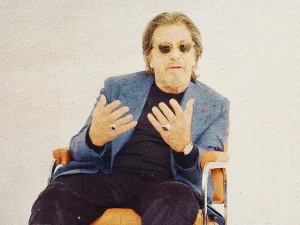
Al Pacino carved out such a crucial, integral part of Hollywood history that it’s difficult to imagine anybody else stepping into the shoes of some of his most iconic roles.
Picture Michael Corleone, for instance, or Tony Montana, or Sonny Wortzik. Any immediate figure that comes to mind wouldn’t have likely left such a lasting impact had the actor depicting them on screen been anyone other than Pacino. Which is saying something, considering that some of his previous competitors have been Hollywood bigshots themselves.
After all, Pacino tried his luck for the leading part in The Godfather before he’d even become a household name, appearing up against names who had already become an established part of the game (Jack Nicholson, Robert Redford and Warren Beatty). Even Robert De Niro, who wasn’t quite as well-known then either, still would have likely made a more sensible choice before Pacino was even considered.
As such, the studio was reluctant to even entertain the idea of bagging Pacino at the time, not only because the actor wasn’t all that well-known just yet but also because they were attempting to score a big name to guarantee the film’s success, as well as someone who would have no struggle holding their own alongside well-established Hollywood heavyweight Marlon Brando. But Coppola was adamant that Pacino was the one, and lo and behold, he was right.
And from there, Pacino was virtually unstoppable. Alongside his starring roles in major Hollywood classics, from Serpico to Dog Day Afternoon, Pacino also earned a handful of Academy Award nominations, establishing himself as a major force of complex characterisation, re-introducing a facet of Hollywood that had been long lost: its humanity.
Even Coppola spotted that authentically magnetic appeal way back then, pushing to have Pacino fill the role simply because no one else would’ve understood the countless layering required to bring the character to life – the calm confidence, the ruthless nature, the dark underlayer that infiltrates even his most collected or considered moments, all of it.
And yet, while this could have easily been Pacino’s most definitive career highlight, for more reasons than one, his answer is actually his stint in David Rabe’s 1977 play, The Basic Training of Pavlo Hummel. Set during the Vietnam War, the play follows an unlucky man who undergoes the harsh realities of basic military training and is so dead-set on becoming a soldier that it ends up costing his life.
Further reading: Cutting Room Floor
At that point in his career, Pacino’s status as a leading Blockbuster figurehead was no secret, and so attracting audience members was no issue. However, his reputation also meant that people who might have perhaps never seen Rabe’s creation got to witness his genius, something that Pacino himself later observed, noting how, when people left the theatre, they were no longer discussing Pacino but the story itself.
“At that point, I was at the highest point of my film career, and I remember that brought audiences in,” he explained. “I was so happy about that because they got to see this great play. Pavlo Hummel is a masterpiece, and I am waiting for it to be done again. In the end, that’s what they talked about afterward.”