The white hat.
The dazzling smile.
The silver screen.
Trigger racing across the open range.
And the song that promised audiences everything would end happily.
For generations, Roy Rogers represented an almost perfect American hero.
He was the “King of the Cowboys.”
Brave.
Honest.
Dependable.
Always ready to rescue someone before riding toward another sunset.
Beside him stood Dale Evans, the woman who became far more than his co-star.
She was his wife.
His creative partner.
His companion through fame, family and devastating personal loss.
Together, Roy and Dale became one of entertainment’s most recognizable couples.
But their real life was far more complicated than the cheerful world audiences saw on television.
There were deaths.
Children lost far too young.
Illness.
The pressures of raising a large family while maintaining enormous careers.
And, according to accounts of Roy’s later reflections, a painful regret that success had demanded something he could never recover:
time.
Time away from home.
Time away from his children.
Time spent being Roy Rogers when part of him simply wanted to be a husband and father.
Three years after Roy died in 1998, Dale followed him.
The couple who had spent more than half a century together were gone.
And behind the familiar Hollywood legend remained a surprisingly human story about what fame can give—and what it can quietly take away.
Before he became Roy Rogers, he was Leonard Franklin Slye.
He was born in Cincinnati, Ohio, in 1911.
There was nothing glamorous about his beginning.
His family lived modestly.
When Leonard was still young, they moved to a farm near Portsmouth, Ohio, where rural life required constant work.
The future cowboy star learned about horses long before movie studios began surrounding him with cameras.
But real farm life did not resemble a Hollywood Western.
There were no perfectly staged sunsets.
No orchestras.
No scripted victories.
There was work.
And during the Great Depression, even hard work could fail to provide security.
Like countless American families, the Slyes struggled.
Eventually, Leonard traveled west to California searching for opportunity.
He found labor.
But he also found music.
That changed everything.
Leonard possessed a natural singing ability and became involved with Western vocal groups.
Eventually, he helped form the group that became the legendary Sons of the Pioneers.
Their harmonies helped define the sound of Western music.
Songs about landscapes, cowboys and the open range created an idealized version of the American West.
Hollywood was paying attention.
Western movies needed stars.
And Leonard Slye was about to become someone else.
Roy Rogers.
In 1938, his film career accelerated dramatically.
Audiences responded to him almost immediately.
He looked right on horseback.
He could sing.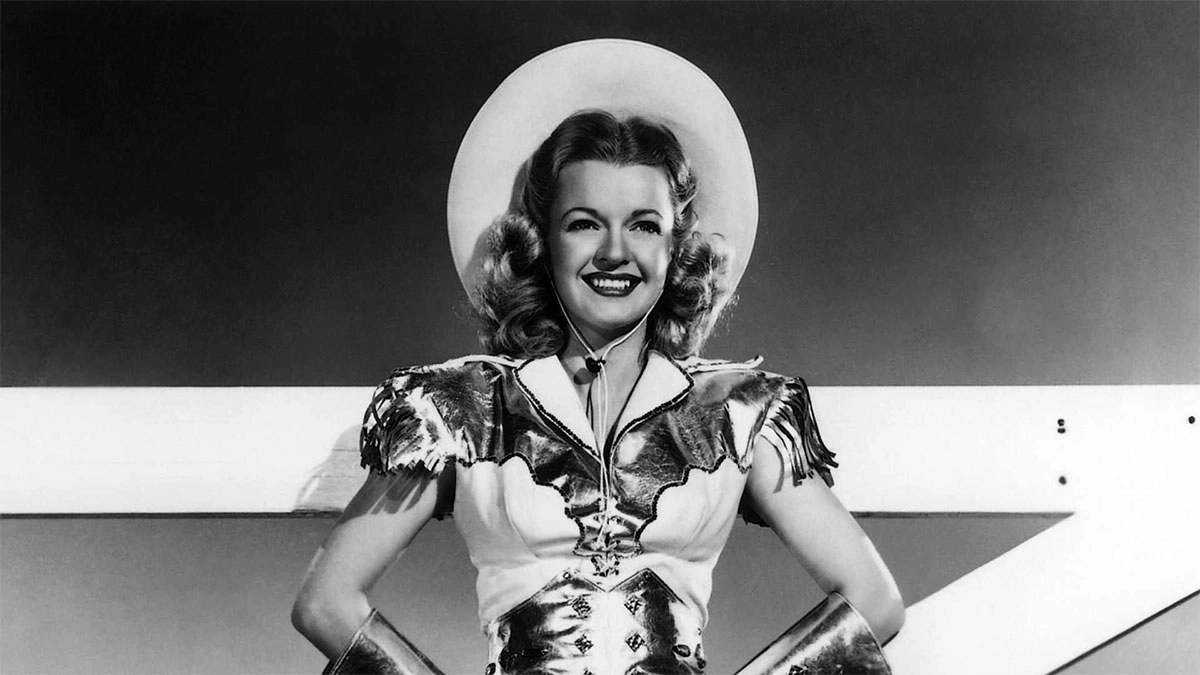
He had an easy screen presence.
Most importantly, he projected decency.
Roy Rogers was not supposed to be a morally complicated antihero.
Audiences knew who he was.
The good guy.
The cowboy children could trust.
As his popularity exploded, another star became inseparable from his legend.
Trigger.
The golden palomino became one of the most famous horses in entertainment history.
Roy and Trigger appeared together in film after film.
Soon, the horse was nearly as recognizable as the man riding him.
But while Roy’s professional life was becoming increasingly successful, his private life was heading toward tragedy.
Roy had been married before his greatest years of fame.
His second wife, Grace Arline Wilkins, became the mother of his growing family.
Then, in 1946, Grace gave birth to their son, Roy Rogers Jr., known as Dusty.
Complications followed.
Grace died shortly afterward.
Roy was suddenly a widower.
The smiling cowboy audiences watched on movie screens was grieving a wife while trying to care for children and maintain an enormous career.
Then came Dale Evans.
Dale had already built an entertainment career of her own.
Born Frances Octavia Smith, she reinvented herself professionally and eventually entered the world of Western movies.
When she began appearing with Roy, audiences noticed their chemistry.
But their partnership would become much larger than the films.
Roy and Dale married on December 31, 1947.
The marriage lasted for the rest of Roy’s life.
More than fifty years.
Their public identities soon became intertwined.
Roy was the King of the Cowboys.
Dale became the Queen of the West.
They appeared together on screen.
They sang together.
They raised a family together.
And eventually television carried their image into American homes.
The Roy Rogers Show premiered on television in 1951 and ran through 1957.
Roy was there.
Dale was there.
Trigger was there.
And Bullet, their German shepherd, became another familiar member of the television family.
The program reinforced the wholesome mythology surrounding Roy and Dale.
Problems appeared.
Good confronted evil.
Values were clear.
And by the end, order returned.
Then came the music.
Dale wrote “Happy Trails,” the song that became permanently associated with the couple.
Its message was simple and optimistic.
A farewell that never felt final.
“Happy trails” suggested that people might separate for the moment but meet again somewhere farther down the road.
Years later, those words would carry far more emotional weight.
Because the Rogers family knew grief intimately.
Roy and Dale raised a large blended family that included biological, adopted and foster children.
Their willingness to open their home became an important part of their public legacy.
But parenthood brought extraordinary heartbreak.
Their daughter Robin Elizabeth Rogers was born in 1950 with Down syndrome and serious medical problems.
At a time when parents of children with disabilities were frequently encouraged to place them in institutions, Roy and Dale chose another path.
Robin remained part of their family.
Dale later wrote openly about her.
Robin died before reaching her second birthday.
The loss devastated the family.
But Dale transformed part of that grief into advocacy and writing, helping challenge some of the attitudes surrounding children with developmental disabilities.
More tragedy followed over the years.
Their adopted daughter Debbie died in a bus accident in 1964.
Their adopted son John David “Sandy” Rogers died in 1965 while serving in the U.S. Army in Germany.
For a family whose public image seemed built around optimism, the private accumulation of loss was extraordinary.
Yet Roy and Dale continued.
They worked.
Raised their children.
Maintained their faith.
And appeared before audiences who still wanted the reassuring couple they remembered from television.
That required a kind of emotional separation.
The public saw Roy Rogers.
The family knew the man who came home after the performance.
And those two lives did not always fit together perfectly.
Roy’s enormous career required travel.
Filming.
Performances.
Business responsibilities.
Public appearances.
For decades, there was always somewhere else to be.
Later reflections on his family life have often been framed around regret.
The very career that allowed Roy to provide extraordinary opportunities for his family also took him away from them.
That contradiction can become especially painful with age.
Money can be replaced.
A film can be replayed.
A song can be recorded again.
Childhood cannot.
Once those years are gone, they are gone.
That is the more credible meaning behind claims about Roy Rogers revealing some terrible “secret guilt.”
There is no need to invent a hidden crime or scandal.
The emotional truth is simpler.
Roy was a man looking backward at a life of enormous achievement and recognizing that success had demanded sacrifices from the people he loved.
His public persona made that admission especially striking.
The King of the Cowboys was supposed to have answers.
Real life had given him questions.
There was another struggle Roy did not advertise enthusiastically.
Age and illness gradually challenged the powerful cowboy image.
For someone whose career had been built around strength, horses and physical independence, declining health could be difficult to accept publicly.
But Roy could not remain the young cowboy forever.
Neither could Dale remain the eternally smiling woman beside him.
Their later years became quieter.
The movie Western had faded.
Their television series belonged to another era.
New generations of entertainment stars had arrived.
But Roy and Dale had something most Hollywood partnerships never achieve.
Longevity.
They had survived the collapse of the studio-era Western.
They had survived professional changes.
They had survived family tragedy.
And they had remained married.
Eventually, the cowboy who had seemed indestructible began approaching the end of his trail.
Roy suffered from significant health problems in his final years.
On July 6, 1998, Roy Rogers died at the age of 86.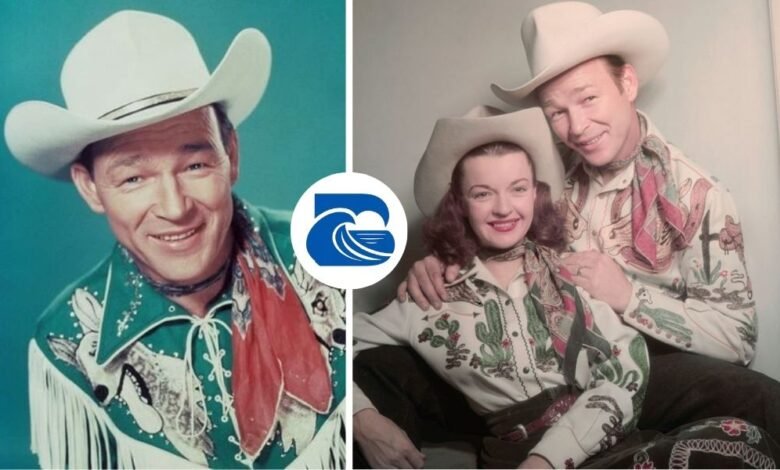
His death was widely reported as resulting from congestive heart failure.
The King of the Cowboys was gone.
For millions of fans, it marked the end of an era.
For Dale Evans, it meant something far more intimate.
She had lost the man who had stood beside her for more than fifty years.
Their relationship had existed through nearly every imaginable phase of life.
Young children.
Movie premieres.
Television success.
Touring.
Business ventures.
Religious faith.
Funerals.
Illness.
Aging.
They had become so closely associated that imagining one without the other seemed almost impossible.
But Dale continued.
She was already dealing with significant health difficulties of her own.
Her later years included serious physical challenges, including strokes and cardiovascular problems.
She had spent decades being perceived as Roy Rogers’s endlessly cheerful partner.
Now the public saw much less of her.
Then, on February 7, 2001, Dale Evans died.
She was 88.
Her death was attributed to congestive heart failure.
Less than three years after Roy’s death, Dale was gone too.
It is tempting to transform those final years into another Hollywood legend.
Roy dies.
Dale cannot bear the grief.
Her heart eventually fails.
The symbolism is powerful.
But reality deserves more care.
Dale was elderly and had experienced serious health problems.
There is no need to claim that grief literally caused her death to understand how profound Roy’s absence must have been.
She had lost her husband.
Her partner.
Her co-star.
The man with whom she had built both a family and an American entertainment institution.
The phrase “broken heart” may capture an emotional truth.
It should not replace the medical one.
What remains remarkable is how much hardship existed behind such an optimistic public image.
Roy and Dale were associated with happy endings.
Their real lives contained many endings that were anything but happy.
Grace’s death.
Robin.
Debbie.
Sandy.
Friends lost.
Careers changing.
Health declining.
And finally, Roy and Dale themselves.
Yet tragedy did not become the only story they told.
That may explain why audiences remained attached to them.
Their optimism eventually carried more weight because life had repeatedly tested it.
They knew grief.
They simply refused to let grief become the only thing they represented.
Roy Rogers became one of the most recognizable Western heroes in American entertainment.
But the cowboy on screen was carefully constructed.
Real life did not give him a white hat capable of solving every problem.
He could not rescue Grace.
He could not save every child he loved.
He could not stop himself from aging.
And he could not recover the years he later wished he had spent differently.
That is where the legend becomes human.
Roy’s greatest secret was not some sensational hidden scandal.
It was vulnerability.
The cowboy who appeared fearless could feel regret.
The father who provided for his family could wonder whether he had given them enough of himself.
The celebrity who had millions of admirers could still discover that fame offered no protection from grief.
Dale understood that better than almost anyone.
She had shared the victories.
She had shared the losses.
And after Roy was gone, she carried the memories alone for nearly three years.
Today, their names remain linked.
Roy Rogers and Dale Evans.
Trigger and Bullet.
The Pioneers.
The television show.
The cowboy and the cowgirl riding toward another adventure.
And, inevitably:
“Happy Trails.”
The song once sounded like a cheerful television goodbye.
After everything Roy and Dale endured, it carries another meaning.
Two people can travel together for decades.
They can build careers.
Raise children.
Survive unimaginable loss.
Grow old beside each other.
And eventually one must leave first.
Roy went in 1998.
Dale followed in 2001.
Hollywood remembered the King of the Cowboys and the Queen of the West.
Their family remembered something less glamorous and more important.
A husband.
A wife.
Parents.
Two people who repeatedly discovered that love could not prevent tragedy—but could help them continue after it.
Roy spent a lifetime riding toward happy endings.
In real life, he learned that not every ending could be rewritten.
And when his own trail finally ended, the woman who had ridden beside him for more than half a century had to travel the final stretch without him.
For three years.
Then Dale Evans reached the end of her trail too.