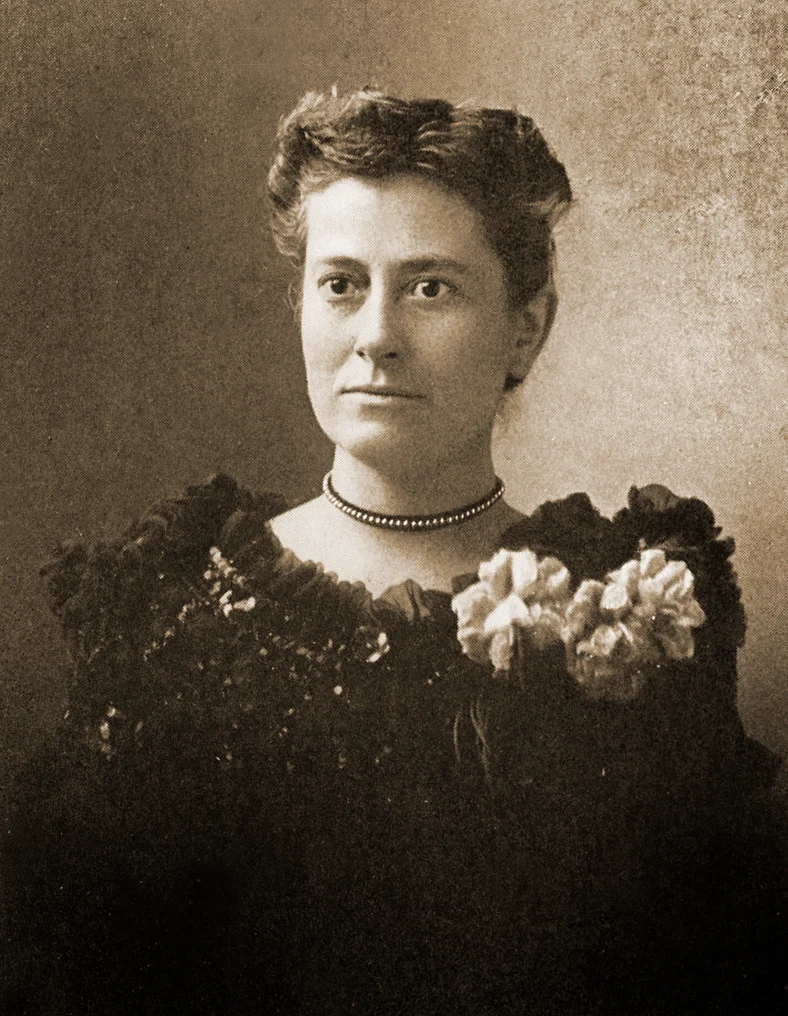
Williamina Paton Stevens Fleming, widely known as Mina Fleming, was born on May 15, 1857, in Dundee, Scotland. She would eventually become one of the most remarkable women in the history of astronomy, despite beginning her life with no special connections to the scientific world. Her journey from ordinary beginnings to groundbreaking discoveries remains an inspiring story of intelligence, determination, and opportunity.
Growing up in the nineteenth century, Fleming lived in a society where women had very few opportunities to pursue careers in science. Most scientific institutions were dominated by men, and women were rarely given the chance to prove their abilities. Nevertheless, she developed a reputation for being intelligent, organized, and hardworking.
Before entering the world of astronomy, Fleming worked as a teacher. In 1877, she married James Orr Fleming, and the couple later moved to the United States. However, her marriage eventually ended, leaving her responsible for supporting herself and her young son during a difficult period in her life.
To provide for her family, Fleming found employment as a domestic servant in the household of Edward Charles Pickering, the director of the Harvard College Observatory. At first, her position had nothing to do with studying the stars. Yet this unexpected opportunity would become the turning point that transformed her future.
Pickering eventually offered Fleming a position at the observatory, where she began examining astronomical photographs and recording information about stars. Her work required extraordinary patience because she had to study thousands of tiny details on photographic plates. What appeared to be repetitive work became the foundation of a remarkable scientific career.
Fleming quickly demonstrated an exceptional ability to identify patterns and distinguish important details in the photographs. She helped classify stars according to their light spectra, allowing astronomers to organize and understand the objects they observed. Her accuracy and dedication made her an increasingly important figure at Harvard.
One of her most significant contributions was her work on the Henry Draper Catalogue of Stellar Spectra, published in 1890. The catalogue organized information about thousands of stars and became an important resource for astronomers. Fleming played a central role in developing the classification system that helped scientists study the stars more systematically.
Her discoveries extended far beyond cataloguing stars. During her career, she was credited with identifying hundreds of variable stars, along with novae and nebulae. Variable stars are particularly important because changes in their brightness can provide valuable information about their properties and the distances of objects in space
.
Perhaps her most famous discovery was the Horsehead Nebula. In 1888, Fleming identified the distinctive dark shape in a photographic image of a region in the constellation Orion. The nebula would later become one of the most recognizable objects in astronomy, admired for its unusual appearance and its importance in the study of star formation.
Despite her accomplishments, Fleming worked during a period when women in science frequently received less recognition than their male colleagues. Women who performed complex calculations and analyzed scientific data were often called human computers. Their contributions were essential, but their work was not always celebrated as it deserved to be.
Fleming eventually became the curator of astronomical photographs at Harvard College Observatory in 1899. She also supervised other women employed in astronomical research. Her appointment reflected the trust placed in her abilities and established her as a respected figure in an institution that had once offered her only domestic employment.
In 1906, Fleming became the first American woman elected an honorary member of the Royal Astronomical Society of Britain. The recognition was an important milestone in a scientific world where women continued to face substantial barriers. It demonstrated that her achievements had earned respect beyond the observatory where she had built her career.
Fleming continued working at Harvard until her death on May 21, 1911, shortly after her 54th birthday. Although her life was relatively short, her contributions helped shape the development of modern astronomy. The records she created and the methods she helped establish continued to support scientific research long after she was gone.
Today, Mina Fleming is remembered as a pioneer who helped reveal the secrets of the universe while overcoming the limitations imposed on women of her time. Her story began with personal hardship and an unexpected job, but it ultimately led to discoveries that influenced generations of astronomers. She proved that extraordinary achievements can emerge from the most unlikely beginnings, and that sometimes the person examining the smallest details can help humanity see the universe in an entirely new way.