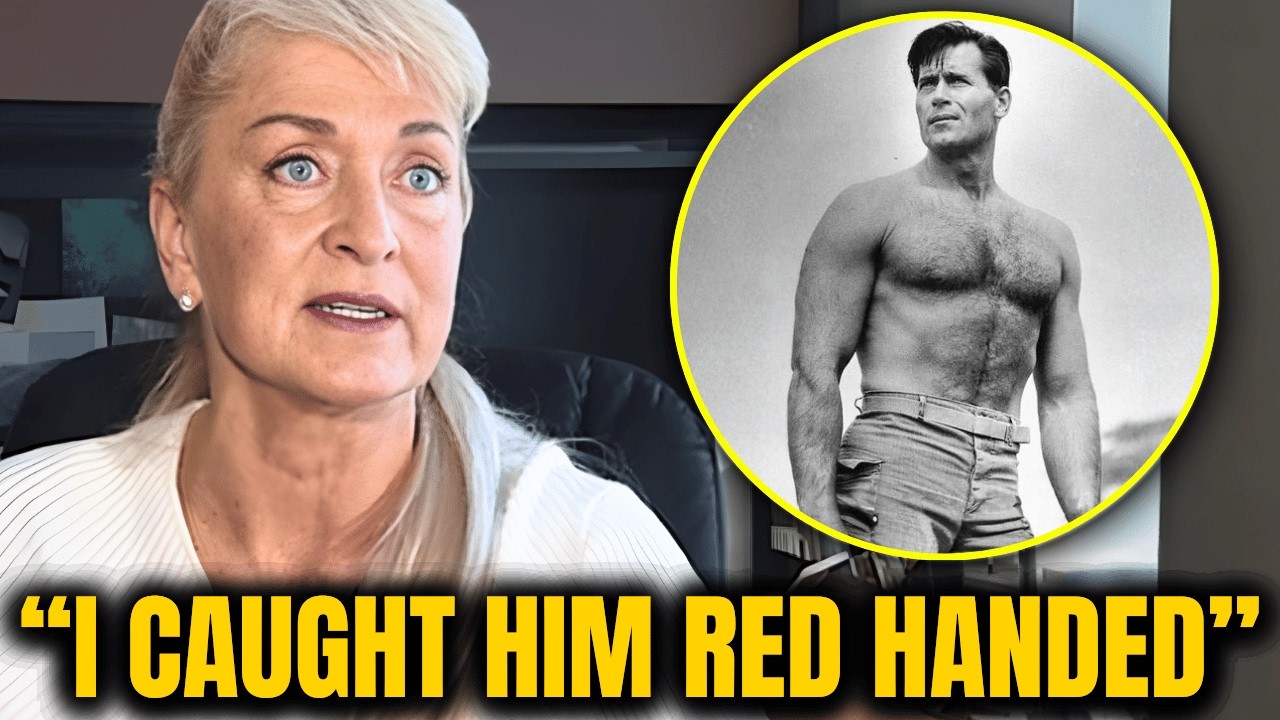
The silence that followed Clint Walker’s death in 2018 was as deliberate as the life he chose to live after leaving Hollywood behind. For decades, the man who defined the American Western for a generation of television viewers remained an enigma, a towering figure who retreated from the cameras that once made him a star. Now, his daughter Valerie has stepped forward to confirm what many long suspected: the real Clint Walker was a man of profound discipline, quiet resilience, and a private world that bore little resemblance to the gun-slinging hero he portrayed on screen.
The announcement of Walker’s passing at the age of 90 came with a stark simplicity that puzzled fans expecting a grand farewell. There were no elaborate tributes from his loved ones, no public processions, and no dramatic interviews. Instead, a brief confirmation emerged that the actor had died of congestive heart failure at a hospital near his longtime home in Grass Valley, California.
 It was a subdued ending for a man whose presence once commanded the attention of millions, but those closest to him understood that this quiet exit was exactly what he would have wanted.
Valerie Walker, a retired commercial airline pilot and one of the first women to fly for a major carrier, broke her silence to paint a portrait of her father that diverged sharply from his on-screen persona. She described his final days not as a tragedy but as a testament to his unyielding spirit. According to Valerie, Clint was a warrior who fought until the very end, maintaining a disciplined lifestyle that prioritized health and longevity even as his body began to fail him.
The actor’s connection to the American West was not merely a professional obligation but a deeply personal calling. While many of his contemporaries in the 1950s and 1960s embraced the glitz and glamour of celebrity culture, Walker gravitated toward the opposite extreme. He found solace in the simplicity of nature and the solitude of rural life, choosing Grass Valley as his sanctuary long before his career began to wind down.
It was there that he could reflect, write, and simply exist without the weight of public expectation.
Walker’s dietary habits were a reflection of his broader philosophy toward life. Valerie revealed that her father avoided red meat entirely, favoring chicken and salmon as staples of his daily meals. This wasn’t about vanity or a desperate attempt to cling to youth; it was about maintaining control over his own body and destiny.
Even as congestive heart failure gradually weakened him, he refused to let the illness define his identity or dictate his daily routines.
The actor’s retreat from public life was not an accident but a conscious choice made long before his health began to decline. After his final on-screen appearance as the voice of Nick Nitro in the 1998 film Small Soldiers, Walker made a deliberate decision to vanish from the Hollywood landscape. He declined interviews, skipped industry events, and avoided retrospectives that would have celebrated his legacy.
He didn’t want to be paraded out as a relic of a bygone era, and he certainly didn’t want nostalgia to become his only currency.
Those who knew Walker understood that he never saw himself as a celebrity in the traditional sense. He viewed himself as a worker, someone who showed up, performed his duties, and returned home without fanfare. This mindset was forged in the crucible of his early life, long before he ever stepped foot on a soundstage.
Born Norman Eugene Walker in 1927, he learned from an early age that nothing in life was guaranteed and that everything had to be earned through sweat and perseverance.
Walker’s parents married less than a year before his birth, and their union eventually dissolved when he was still a young boy. His mother, Glattis Henrietta Walker, was an immigrant born in what is now Croatia, raised in a deeply religious Moravian evangelical tradition that valued discipline, hard work, and emotional restraint. His father, Paul Arnold Walker, labored for Shell Oil, a physically demanding job that reflected the harsh realities of working-class America during the Great Depression.
The family’s financial struggles meant that Clint was working by his teenage years, taking on factory jobs, riverboat work, and oil field labor out of sheer necessity rather than ambition. This early exposure to hardship shaped his worldview and instilled in him a sense of self-reliance that would define his entire life. By the age of 17, he joined the United States Merchant Marine, seeking stability and purpose in a world that offered neither.
After leaving the merchant marine, Walker drifted across the country, taking whatever work he could find in Texas, California, and Nevada. It was in Las Vegas, working as a doorman at the Sans Hotel, that his life took an unexpected turn. Casting directors and producers began to notice the towering young man with the commanding presence, and they all told him the same thing: you should be in movies.
Walker was initially hesitant, but fate had other plans.
The legendary talent agent Henry Wilson, known for discovering and reshaping young male stars like Rock Hudson, took an interest in Walker. Wilson immediately decided that Norman Eugene Walker didn’t sound like a leading man and renamed him Jet Norman. For a brief period, Walker went along with the change, understanding that Hollywood played by its own rules.
But even then, he resisted anything that didn’t feel authentic to his core identity.
 Walker’s first on-screen appearance came in 1954 with an uncredited role in the Bowery Boys comedy Jungle Gents. The role was forgettable, but it placed him inside the Hollywood system. Soon after, he heard that legendary director Cecil B.
DeMille was searching for physically imposing men for his upcoming biblical epic The Ten Commandments. Walker secured a meeting, but fate tested him when he stopped to help a woman with a flat tire on his way to the studio.
When Walker arrived late to his meeting, DeMille called him out for his tardiness. Walker explained what had happened, and the director’s demeanor shifted entirely. The woman he had helped was none other than DeMille’s secretary, and Walker was immediately cast in the role of the captain of the Pharaoh’s Guard.
It was a small part, but it proved to be the lucky break that launched his career. The success that followed gave Walker the confidence to shed the manufactured name of Jet Norman and reclaim his own identity.
By the mid-1950s, Warner Brothers was preparing a television western unlike anything that had come before it. The show would be called Cheyenne, and it demanded a lead who could carry moral weight, physical authority, and emotional restraint. Warner Brothers auditioned dozens of actors, including established stars and studio favorites.
Walker didn’t believe he had a real chance, but on his second day of testing, he walked in with a swagger that would define his career.
Jack Warner himself reviewed Walker’s audition and knew immediately that he was born to play Cheyenne Bod. The character was a drifter in the post-Civil War American West, orphaned at a young age and raised by the Cherokee. Cheyenne moved through the frontier as an outsider, someone who belonged everywhere and nowhere at the same time.
Walker related to the character’s sense of displacement, and he played the role with a sincerity that resonated deeply with audiences.
Cheyenne premiered on ABC in 1955 and became an instant success. Viewers were drawn to the character’s moral clarity, his compassion for the vulnerable, and his refusal to 𝓪𝓫𝓾𝓼𝓮 power. In a genre often defined by gunfights and quick justice, Cheyenne Bod had a conscience.
The show’s success reshaped television programming, proving that audiences were willing to commit to longer, more complex stories. Networks quickly followed suit, launching a wave of hour-long westerns that borrowed heavily from Cheyenne’s formula.
Generations of actors followed in Walker’s footsteps. Clint Eastwood, for example, was undoubtedly influenced by Walker’s portrayal of a stoic, morally complex cowboy. Similarly, stars like Sam Elliott and Tom Selleck would later echo Walker’s no-nonsense approach to the western hero.
But it all began with Clint Walker’s Cheyenne Bod. However, in 1958, at the height of the show’s popularity, Walker made a move that stunned Hollywood: he walked away.
Walker went on strike in a contract dispute with Warner Brothers after realizing that the studio was undervaluing his contribution to the show’s success. While he was gone, the studio attempted to replace him with another actor, introducing a new character named Bronco Lane, played by Ty Hardin. But the audience rejected it.
Ratings plummeted, and it became clear that Cheyenne without Clint Walker wasn’t Cheyenne at all. Warner Brothers eventually renegotiated Walker’s contract, and he returned to the series in 1959.
The moment was significant in an era when studios held near-total control over actors. Clint Walker had proven that a television star could push back and win. Cheyenne ultimately ran for seven seasons, producing 103 episodes before ending in 1962.
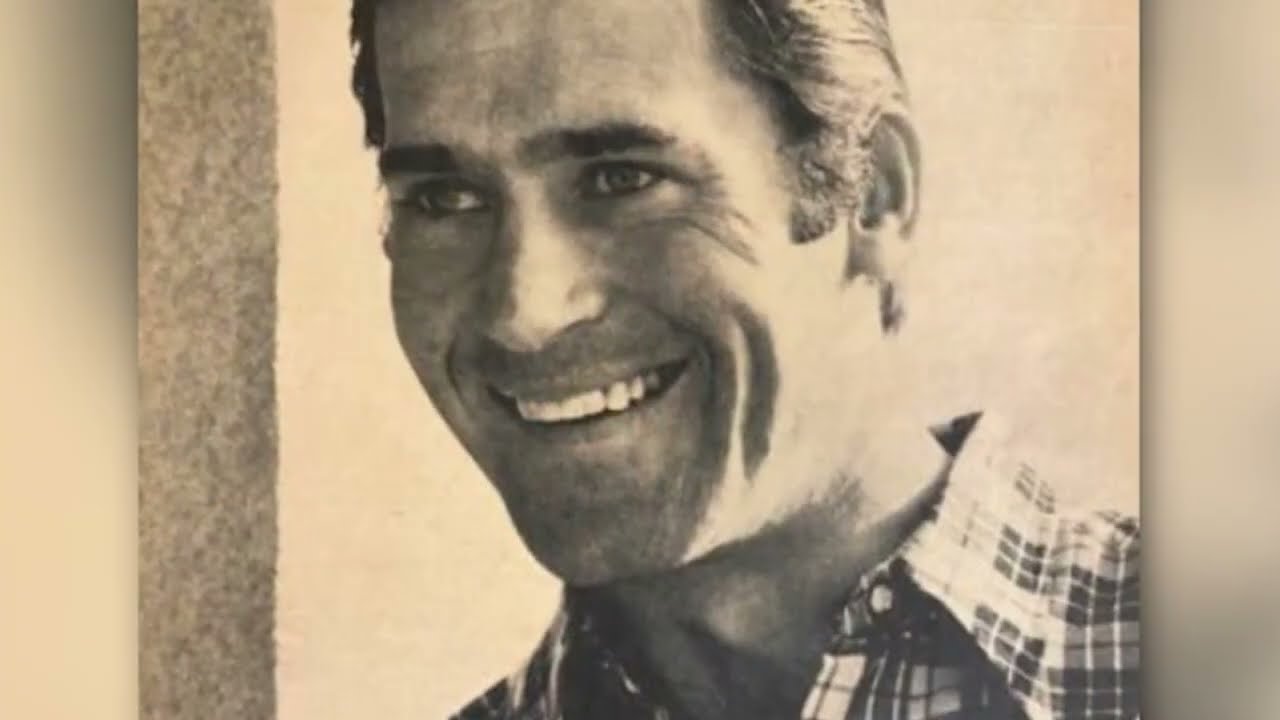 By then, Walker was a cultural fixture, his image as Cheyenne Bod inseparable from the idea of the western hero itself. But the role came with a cost, as Walker would later acknowledge that Cheyenne defined him in ways he couldn’t escape.
Casting directors struggled to see him as anything else, and audiences expected the same moral authority in every role. Walker understood the limitations of his fame, and that tension shaped the next phase of his career. After eight years on Cheyenne, Jack Warner invited Walker to lunch for the first time.
During the meeting, Warner offered Walker either a new TV show or more episodes of Cheyenne. Walker expressed his desire to take a break from television and pursue feature films.
Walker revealed that he didn’t truly realize the extent of his fame until after Cheyenne ended. It was only when he started doing memorabilia shows and meeting fans that he understood how impactful his role had been. He received many letters from fans, especially women, telling him how Cheyenne had been a father figure or a role model during tough times.
These fans, many of whom were grandparents by the time he met them, expressed how they now shared Cheyenne with their own grandchildren.
After Cheyenne, Walker didn’t rush the transition to film. Instead of chasing leading roles that mirrored his television persona, he took a deliberate, sometimes unconventional path. He began appearing in a mix of television dramas and supporting film roles, quietly testing the waters beyond the western genre.
In 1964, Walker surprised audiences with a supporting role in the romantic comedy Send Me No Flowers, starring Rock Hudson and Doris Day. It was a notable departure from the stoic western hero audiences expected.
But it was Frank Sinatra who would offer Walker one of his most meaningful opportunities. In 1965, Sinatra cast Walker in the lead role of None but the Brave, a World War II 𝒹𝓇𝒶𝓂𝒶 that marked the only film Sinatra ever directed. The project was ambitious and unusual, focusing on the humanity shared by American and Japanese soldiers stranded on a remote island.
For Walker, the role was a chance to lead a film that emphasized restraint, moral ambiguity, and quiet authority.
In 1967, Walker was cast as Samson Posey in The Dirty Dozen, a war film that would become one of the most iconic ensemble movies of the era. Unlike the stoic heroes he had played before, Posey was meek, soft-spoken, and emotionally fragile. The performance stunned everyone.
In one of the film’s most memorable scenes, Lee Marvin’s character deliberately provokes Posey, pushing Walker to explode with raw, uncontrolled rage before being swiftly subdued. The moment shattered expectations and proved Walker could deliver emotional volatility as convincingly as physical strength.
The Dirty Dozen was a massive success both critically and commercially. Surrounded by heavyweights like Lee Marvin, Ernest Borgnine, and Charles Bronson, Walker more than held his own. The film permanently altered how Hollywood viewed him.
He was no longer just a television cowboy; he was a serious film actor. Walker later shared that his character was based on a real-life group called the Filthy 13, a unit of soldiers in World War II known for their unconventional methods and tough demeanor.
In May 1971, Clint Walker nearly said goodbye to the world well before his time. While skiing at Mammoth Mountain, Walker suffered a catastrophic accident when a ski pole pierced his chest and punctured his heart. Doctors who arrived at the scene couldn’t find a pulse.
There was no heartbeat. The grim conclusion was immediate: Clint Walker had died. But against all odds, a third doctor arrived and noticed faint signs of life, a pulse too weak to detect with traditional methods.
 In a desperate move, the doctor performed emergency surgery to repair the damage. Walker was rushed to the hospital, his life hanging in the balance. For hours, no one knew if the actor would survive.
Walker himself later opened up about the experience, saying that he was aware of being in a spirit body state at the time. While the world thought he was slipping away, Clint shared that he was more alive and alert than ever before. He didn’t feel any pain and wasn’t even all that concerned with going back to life.
To everyone’s shock, Walker survived and remarkably returned to work just two months later. The accident left a deep mark on him, not only physically but emotionally. It was a turning point that reshaped his worldview and influenced how he would approach life and work in the years to come.
Walker never spoke much about the accident because he didn’t want to be seen as a man who had survived an accident. He wanted to be remembered as an actor who returned to his job against all odds.
In the years following his recovery, Walker’s career continued at a steady pace. He found new avenues in television, including starring in Pancho Villa in 1972 and the cult classic Killdozer, which became a hit on the small screen. He also had roles in Baker’s Hawk and The White Buffalo, films that while not huge box office successes earned him respect for his versatility.
As Walker’s career slowed down, he didn’t disappear. He simply chose to do things that he loved.
Walker’s connection to the western genre never faded. Even after stepping away from acting, he continued to contribute to the tradition that had made him a star. In the early 2000s, he formed an unexpected partnership with Western author Kirby Jonas, a friendship facilitated by actor James Drury.
Walker and Jonas spent two years working together on a storyline that Walker had conceived involving gold and the Yaqui, an indigenous group from the American Southwest and Mexico. The project culminated in the publication of Yaqui Gold in 2003.
Behind the scenes, Walker’s personal life was just as tumultuous as his career. Over the years, he had three marriages, each lasting around 20 years. His first marriage was to Vera Garver in 1948, and the couple had their daughter Valerie, born in 1950.
After his divorce from Vera, Walker married Giselle Hennessy in 1974, and their relationship lasted until Giselle’s tragic passing in 1994. Walker married for a final time in 1997 to Susan Cavaleri, and they remained together until his death.
In his personal life, Walker embraced a lifestyle that reflected his disciplined, no-nonsense approach to the world. He was a pescatarian, abstaining from beef but enjoying fish, chicken, and salmon. This reflected the healthy living habits he maintained throughout his life, especially after his near-fatal skiing accident.
Beyond his diet, Walker held strong political beliefs and was not shy about expressing them. He supported Barry Goldwater in the 1964 United States presidential election, a conservative choice that reflected his personal values.
Clint Walker’s legacy and his lasting impact on the western genre are undeniable. Beyond his on-screen heroics, the actor’s real-life dedication, professionalism, and strength deserve to be celebrated for years to come. His daughter Valerie’s confirmation of the rumors surrounding his private life reveals a man who was far more complex than the characters he portrayed.
He was a warrior in every sense of the word, not just on screen but in the quiet, unglamorous battles of his own life.