The air in the room shifted the moment Sally Field stepped forward to the microphone. It was January 2023, and the Palm Springs International Film Awards had gathered to honor Steven Spielberg for The Fabelmans, but the 79-year-old actress was not there to discuss cinematic technique or box office receipts. She was there to settle a decades-long account of loyalty, near-misses, and a friendship that defied the transactional nature of Hollywood.
With a calm that comes only from age and hard-won wisdom, Field began to speak about the director who has been a constant presence in her life for over half a century, revealing a story that began with a blind date that never happened and culminated in one of the most brutal, triumphant battles of her career.
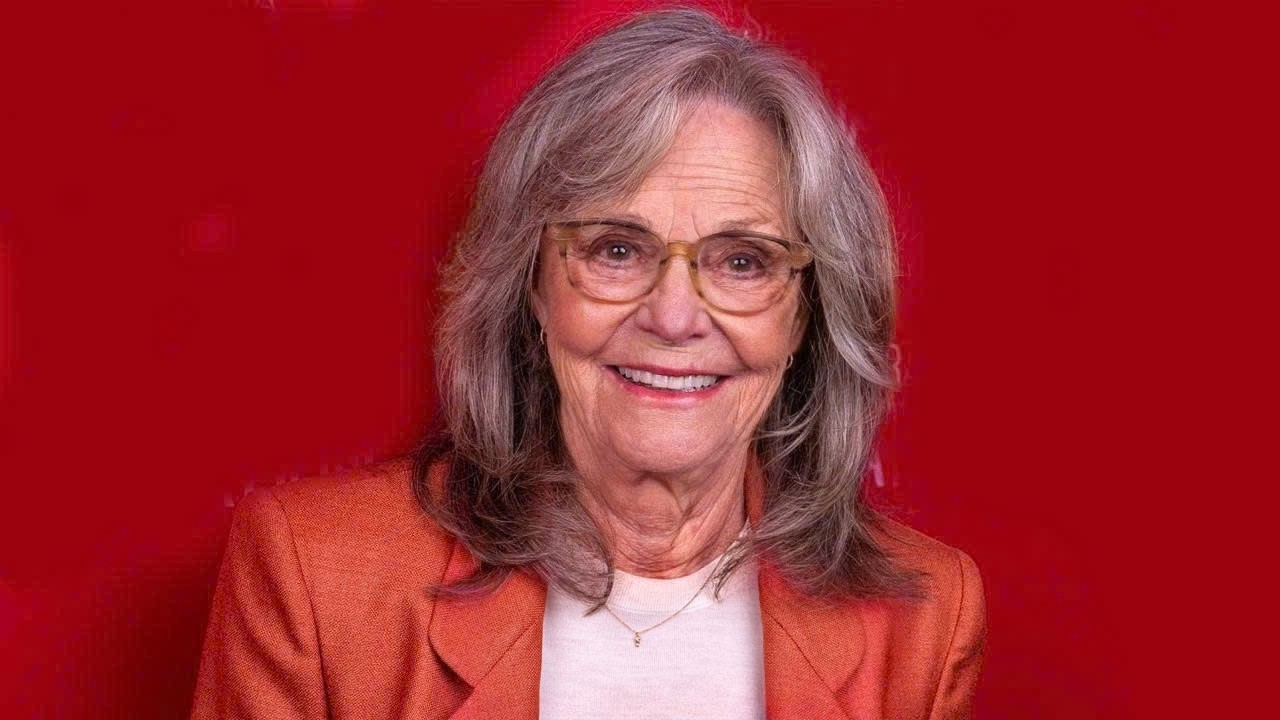 The narrative that Field unfolded painted a portrait of a relationship that has survived the industry’s most corrosive elements: ego, rejection, and the relentless passage of time. It was not a tale of romance, though that was the original intention. Instead, it was a story of a business manager’s failed matchmaking attempt in 1968 that inadvertently forged an unbreakable bond between two young artists.
For years, Field misremembered the exact date of their first meeting, but she never forgot the feeling of connection. She described Spielberg as “my biggest supporter and a constantly welcoming place,” words that carried the weight of shared history rather than mere professional courtesy.
That support, however, was not always immediate or unconditional. The most compelling chapter of Field’s reflection centered on the grueling, emotionally draining journey to secure the role of Mary Todd Lincoln in the 2012 historical epic Lincoln. Spielberg had first approached her in 2005, envisioning her opposite Liam Neeson.
But the project languished in development hell for years, and when the script finally arrived from Tony Kushner, the landscape had changed. Neeson had departed, replaced by the formidable Daniel Day-Lewis, a casting shift that triggered a crisis of confidence in Field and, more critically, a crisis of vision in Spielberg.
The director, consumed by the logistics of a massive production, called Field with a devastating admission. He confessed that he could not picture her standing opposite Day-Lewis. The chemistry he had imagined with Neeson did not translate to the new dynamic.
For an actress with two Academy Awards on her shelf, this could have been a graceful exit. Instead, it ignited a fire. Field, who had spent years internalizing the character, refused to accept the verdict.
She challenged the most powerful director in Hollywood to his face, insisting, “You’re wrong, Steven. You’re wrong. I am Mary.
There is no one else. It is me.”
This was not the behavior of a fragile star protecting her legacy; it was the primal instinct of an actor who knew her truth. Field demanded a screen test, a request that initially met with resistance. Spielberg argued that Day-Lewis was in Ireland, deeply immersed in preparation, and that arranging a test was logistically impossible.
Field countered with a proposition that revealed her desperation and her grit: she would test alone. She understood the risk of humiliation, the possibility of a public failure that would cement her exclusion from the project, but she decided that the regret of not fighting would be far worse than the sting of rejection.
The first solo test was, by her own admission, a disaster. She performed a powerful monologue against a bare wall, and afterward, she felt like “a bird running across water, unable to lift into the air.” The magic was absent.
Spielberg reviewed the footage, compared it to recent footage of Day-Lewis, and made his call. It had not worked. He told her the test had failed.
For most actors, this would have been the final word. But Spielberg, despite his initial resistance, could not shake the image of Field’s performance. It lingered in his mind, a persistent ghost that refused to be dismissed.
 In a move that defied standard Hollywood protocol, Spielberg sent the rejected footage to Day-Lewis in Ireland. The actor, known for his obsessive preparation and uncompromising standards, watched the test and made a startling proposal. He refused to judge Field without seeing them together.
He believed it was unfair to assess her in isolation. So, the method actor boarded a transatlantic flight, traveled thousands of miles to Los Angeles for a single day, and agreed to a joint screen test. Field later described this as the most generous act another actor had ever performed for her, a gesture of solidarity that transcended competition.
The meeting was shrouded in secrecy and misdirection. Field believed she was flying to New York for a casual coffee, planning to wear jeans. A last-minute call from Spielberg’s office asking about her hair and makeup team alerted her to the true nature of the encounter.
She arrived to find Day-Lewis already in full character as Abraham Lincoln. Without a moment’s hesitation, Field transformed into Mary Todd. They did not greet each other as Sally and Daniel.
She addressed him as “Mr. Lincoln,” and he responded with “Mother,” the affectionate nickname Lincoln used for his wife. For the next hour, they improvised entirely in character, discovering the dynamics of a historic marriage in real time.
The test was electric. When it concluded, Field drove home, exhausted but satisfied that she had done everything possible. Her phone rang shortly after.
On the line were Spielberg and Day-Lewis, together. They asked her a single question that erased years of doubt: “Will you be our Molly?” The struggle, the rejection, and the subsequent vindication became the foundation of her performance.
Spielberg later admitted guilt for putting her through the ordeal, but Field rejected the apology. She insisted that without the fight, she never would have found the true essence of Mary Todd Lincoln. The struggle was the gateway to the role.
The production itself became a transformative experience for Field. She described the set as “nirvana,” a place where her deeply ingrained method acting techniques, honed at the Actors Studio under Lee Strasberg, were not just tolerated but celebrated. For decades, she had hidden her process, retreating to her chair to protect her emotional state, fearing judgment from colleagues.
On Lincoln, that fear evaporated. Day-Lewis remained in character between takes, communicating in 19th-century vernacular, and the British crew was asked to suppress their natural accents to preserve the illusion of Civil War-era Washington. Field finally felt free to work as she had always believed she should.
The atmosphere was one of total immersion. Spielberg wore a suit every day, reinforcing the gravity of the material. Day-Lewis’s commitment was so profound that he later admitted part of him genuinely believed he was Lincoln.
For Field, this was not eccentricity; it was validation. She no longer had to apologize for her intensity. The respect for the craft was universal, and the result was a performance that earned her an Academy Award nomination and widespread critical acclaim.
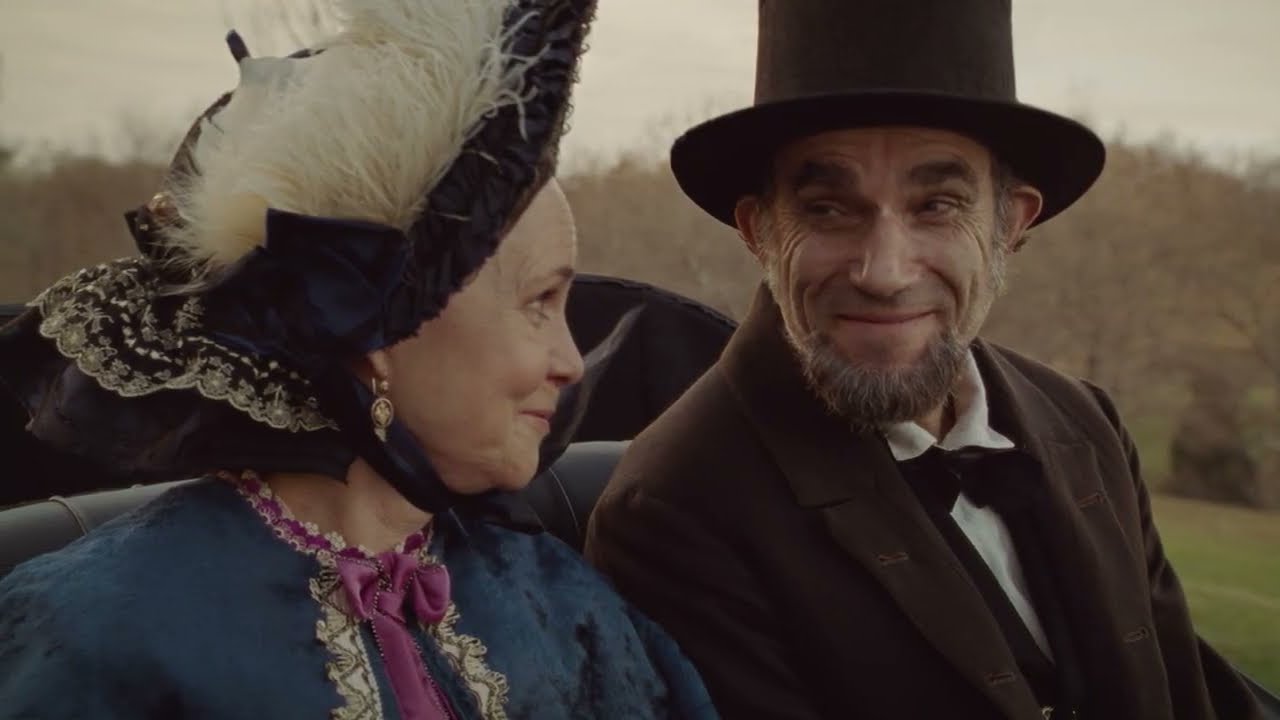 But for Field, the true reward was not the nomination or the praise. It was the experience of being fully understood by her director and her co-star.
Field’s reflection on the project revealed a deeper philosophy about the nature of acting and its lasting impact on the performer. She spoke about the roles that permanently changed her—Sybil, Norma Rae, Edna Spalding, and Mary Todd Lincoln—arguing that the human brain cannot fully separate lived experience from deeply inhabited emotional experience. Once an actor spends months understanding another person’s fears and hopes, part of that journey remains forever.
This belief shaped her view of success. She insisted that awards were never the greatest reward. Given the choice between another trophy and the opportunity to work with artists of Spielberg’s and Day-Lewis’s caliber, she said every serious actor would choose the work.
The bond that emerged from that production was not just professional. It was familial. When Field took the stage at the Palm Springs ceremony, she spoke of Spielberg as someone who had stood beside her through “the good and bad, the laughter and the angst.”
She reminded the audience that their relationship had begun with a failed blind date and evolved into something far more enduring. She mentioned his wedding, which she attended over 30 years ago, and his continued closeness to his wife and children. It was a rare public acknowledgment of a private bond that has quietly endured while countless other Hollywood relationships have crumbled under the pressure of fame.
Spielberg’s response to her tribute was equally revealing. He publicly thanked her, calling her portrayal of Mary Todd Lincoln one of the finest performances of her career. But then he went further, confirming that she had become part of his family.
He spoke of her presence at his wedding and her role in his life’s milestones. The exchange offered a glimpse into a friendship that has provided stability in an industry defined by chaos. It is a relationship built on trust, honesty, and a mutual belief in each other’s talent, even when that belief required a fight to be proven.
The story of Field and Spielberg is a counter-narrative to the cynical view of Hollywood as a place of transactional relationships. It is a testament to the power of persistence and the importance of having someone in your corner who believes in you, even when you doubt yourself. Field’s determination to challenge Spielberg’s initial rejection was not an act of defiance but an act of faith in her own ability and in the strength of their relationship.
She knew she could push him because she trusted that the foundation of their bond could withstand the pressure.
As Field looks back on a career that spans more than half a century, her greatest memories are not centered on the golden statues or the standing ovations. They are centered on the people who stood beside her when doubt threatened to overwhelm confidence. The story she told at Palm Springs was not just about a movie or a director; it was about a lifelong partnership that has weathered every storm the entertainment industry could throw at it.
From the failed blind date in 1968 to the triumphant screen test with Daniel Day-Lewis, their journey has been marked by a series of moments that could have ended the friendship but instead strengthened it.
The significance of Field’s public reflection at age 79 cannot be overstated. In an industry that often discards older actresses, she used her platform to redefine the narrative of her own legacy. She did not speak of her own achievements as isolated victories but as shared experiences with a man who has been a constant presence in her life.
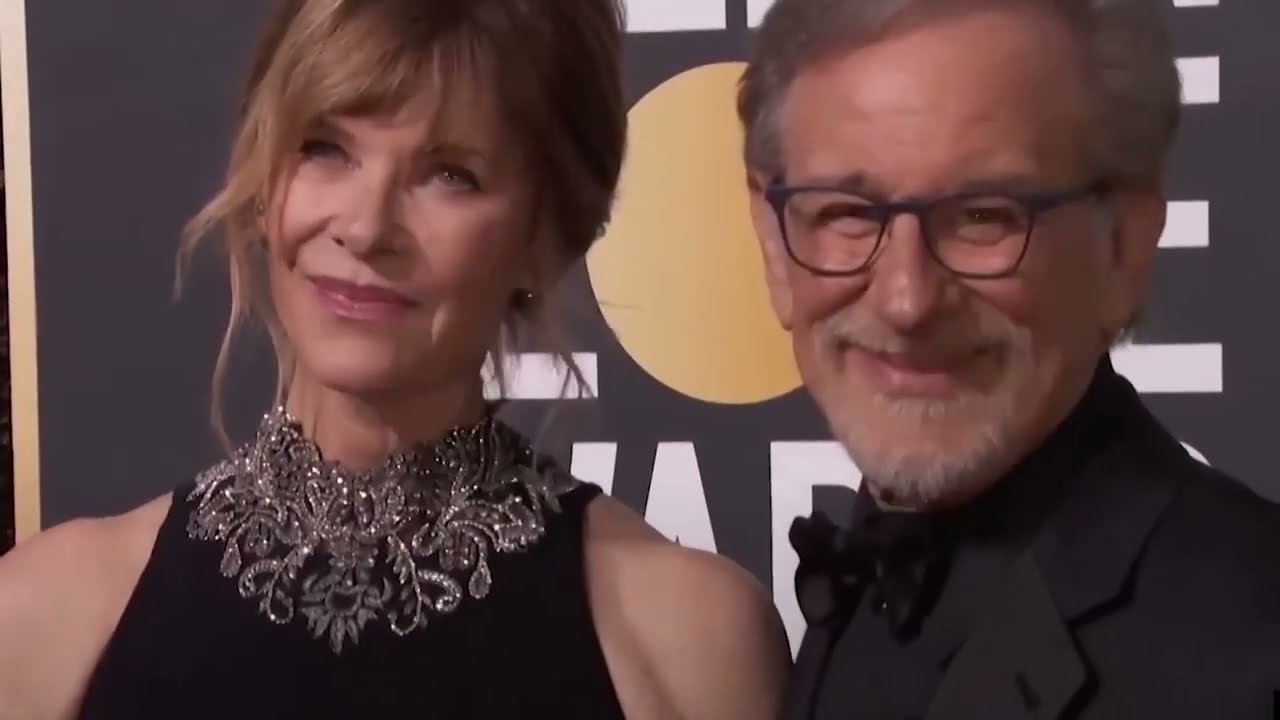 She acknowledged the self-doubt that plagued her, the fear of rejection that nearly made her walk away from Lincoln, and the courage it took to demand a chance. Her honesty was disarming, offering a rare glimpse into the vulnerability that exists behind the facade of a two-time Oscar winner.
The friendship between Field and Spielberg serves as a reminder that some of the most meaningful relationships in life are not the ones we plan. They are the ones that happen by accident and endure by choice. A business manager’s attempt to set up a blind date between two young talents failed in its immediate objective but succeeded in creating something far more valuable.
It created a bond that has survived five decades of personal and professional upheaval. It is a bond that has been tested by rejection, strengthened by collaboration, and cemented by mutual respect.
For Field, the experience of making Lincoln was a culmination of everything she had learned throughout her career. It was the first time she felt she could work exactly the way she had always wanted, without apology or compromise. The environment created by Spielberg and Day-Lewis allowed her to explore the depths of her character with complete honesty.
She did not have to hide her process or worry about being judged. She was free to be the actor she had always aspired to be, and the result was a performance that will be studied for generations.
The legacy of their friendship extends beyond the films they have made together. It is a testament to the power of loyalty in a town that often rewards opportunism. Field has spoken about the importance of having someone who believes in you, and Spielberg has proven to be that person time and time again.
He did not give up on her after the initial screen test failed; he sent the footage to Day-Lewis because something in her performance stayed with him. That decision changed the course of her career and solidified their bond forever.
As the story of Sally Field and Steven Spielberg continues to unfold, it offers a powerful lesson about the nature of enduring relationships. It is not about grand gestures or public declarations of affection. It is about showing up, year after year, through the good and the bad.
It is about being willing to fight for someone even when they doubt themselves. It is about creating a space where trust can flourish and where honesty is valued over ego. Field and Spielberg have built that space together, and their friendship stands as a monument to what is possible when two people genuinely care about each other’s success.
The 2023 Palm Springs ceremony was not just an awards show; it was a celebration of a lifelong partnership. Field’s speech was a love letter to a friend, a director, and a man who has been a constant in her life. She spoke of his humanity, his humor, and his imagination, qualities that have made his films part of the world’s collective memory.
But she also spoke of the private moments, the milestones celebrated together, and the quiet support that has meant more to her than any award. It was a reminder that the most important stories are often the ones told away from the cameras.
In the end, the story of Sally Field and Steven Spielberg is a story about the courage to fight for what you believe in and the grace to accept help when you need it. Field fought for Lincoln because she knew she was right, but she also trusted Spielberg enough to challenge him. That trust was rewarded with a performance that defined the final act of her career.
As she looks back on her life, she does so with a sense of gratitude for the people who stood by her. And at the top of that list is a director who once tried to set her up on a blind date and ended up becoming her family.