The silence lasted five decades. It was a silence filled with tours, tragedies, and the unspoken weight of a generation that equated emotional endurance with artistic strength. But now, at 77 years old, Jackson Browne has finally broken it, offering a candid and deeply human reassessment of Randy Meisner, the founding bassist of the Eagles, whose haunting tenor and fragile spirit were often misunderstood by the very industry that celebrated them.
In a series of reflective conversations that have stunned the music world, Browne has moved beyond the polite platitudes of rock history to deliver a stark truth: Randy Meisner was not a casualty of weakness, but a victim of an era that demanded he turn his deepest pain into a nightly performance. Browne’s words, delivered with the clarity of a man who has survived the storm, are reshaping the legacy of one of rock’s most enigmatic figures.
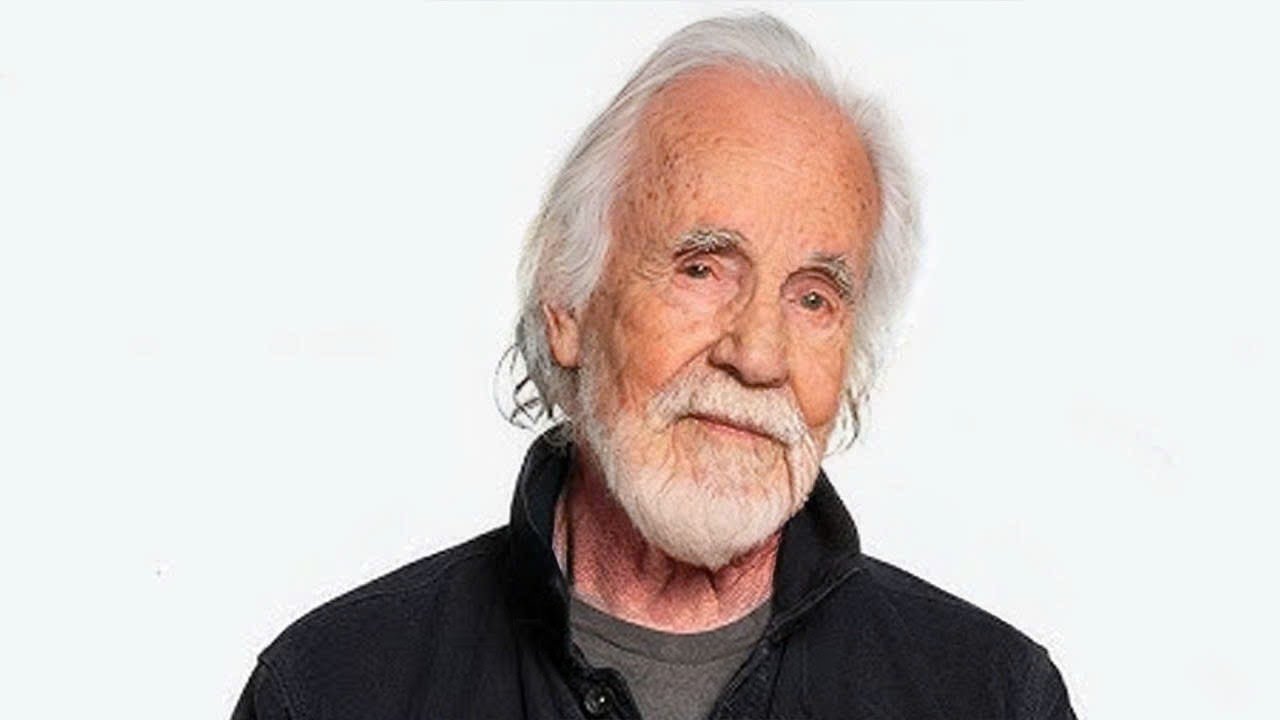 Born Clyde Jackson Browne on October 9th, 1948, in Heidelberg, Germany, to a US Army serviceman, his entry into the world was already steeped in a history of displacement and duty. The family’s subsequent relocation to Los Angeles placed him at the epicenter of a cultural revolution, where the folk revival and the raw energy of early rock and roll collided with the idealism of the counterculture.
From that fertile ground, Browne absorbed a musical vocabulary that would define his own songwriting, but he also witnessed the darker undercurrents of the scene. As a teenager, his sensitivity to language was extraordinary, crafting songs with a maturity that belied his years. His early collaborations, including a brief stint with the Nitty Gritty Dirt Band, were merely preludes to a career that would be defined by introspection and emotional exposure.
His song “These Days,” written at just 16 and famously recorded by Nico in 1967, was a startling prophecy of the regret and weariness that would come to define his adult work. It was a glimpse into a soul that understood loss before it had truly experienced it, a trait that would later forge a profound, unspoken kinship with Meisner, a man whose voice carried the same weight of unspoken sorrow.
The early 1970s saw Browne ascend as a central figure in the singer-songwriter movement, with his 1972 self-titled debut introducing a voice of profound vulnerability. Albums like For Every Man and Late for the Sky explored the treacherous terrain of love, loss, and the erosion of youthful ideals, establishing him as an artist unafraid to confront the shadows within himself and the world around him.
But it was tragedy that truly forged his artistic identity. The suicide of his first wife, Phyllis Major, in 1976, sent shockwaves through his life that resonated in the harrowing tracks of The Pretender. This album, a masterpiece of grief and perseverance, captured the dissonance between outward success and internal devastation, a theme that would later inform his understanding of Meisner’s own struggles within the Eagles.
Commercial success reached its zenith with Running on Empty in 1977, a groundbreaking album recorded on the road that captured the transient, exhausting reality of touring. It was during this period that Browne observed the machinery of the music industry up close, watching as it consumed artists who were ill-equipped to handle the pressure, a dynamic he now believes was profoundly destructive for his friend.
As the political climate shifted in the 1980s, Browne’s music evolved into a platform for activism, addressing social justice and environmental issues with a fervor that sometimes alienated critics. Yet this evolution was rooted in the same core belief that guides his current revelations: that silence in the face of suffering is a form of complicity, a lesson he now applies to the story of Randy Meisner.
Now, with the perspective of age and the painful wisdom of having lost his own son, Ethan, to a 𝒹𝓇𝓊𝑔 overdose in 2025, Browne speaks with a gravity that commands attention. He describes Meisner not as the “difficult” or “unreliable” figure of rock lore, but as a gentle soul whose high, aching tenor was a conduit for emotional truths that he could barely contain himself.
Browne insists that songs like “Take It to the Limit” were not merely performances but confessions, and that Meisner paid a personal cost every time he sang them. The pressure to transform his own fragility into entertainment night after night was a burden that the band’s confrontational atmosphere only exacerbated, leaving Meisner with no outlet for his internal conflict.
According to Browne, Meisner’s decision to walk away from the Eagles was not a failure of nerve but an act of survival. He internalized the conflict that others externalized, and in a culture that celebrated excess and aggression, his sensitivity was misread as a weakness rather than recognized as the source of his profound artistry.
Browne reflects with palpable regret on the music industry of the 1970s, an era that celebrated excess while ignoring the emotional fallout it caused. He admits that artists lacked the language and the compassion to truly support one another, and that the collective focus on “toughness” prevented them from seeing the quiet desperation of a friend in need.
The narrative that has long surrounded Meisner—of a man undone by the pressures of fame—is, in Browne’s view, a gross oversimplification. He argues that Meisner was overwhelmed not by success, but by the demand to commodify his pain, to turn his most intimate vulnerabilities into a product for mass consumption.
Browne’s reassessment is not just a defense of Meisner but a broader indictment of an era that confused emotional repression with strength. He suggests that the very qualities that made Meisner an irreplaceable vocalist—his openness, his tenderness, his lack of armor—were the same qualities that the industry and his bandmates failed to protect.
The story of the Eagles is often told through the lens of its dominant personalities, the clashes between Don Henley and Glenn Frey, and the relentless pursuit of perfection. But Browne’s account centers the quiet tragedy of Meisner, a man whose voice could break your heart but who was given no space to mend his own.
Browne recalls the atmosphere within the band as one of constant tension, where conflict was a currency and vulnerability was a liability. Meisner, he says, was the odd one out, a man who preferred harmony in both music and life, and who found himself increasingly isolated as the band’s internal dynamics grew more volatile.
The decision to leave, Browne argues, was a rational response to an untenable situation. It was a choice to preserve his own sanity, even if it meant walking away from the pinnacle of rock stardom. In Browne’s telling, Meisner’s departure was not a surrender but a strategic retreat from a battlefield he never wanted to be on.
 Browne’s own life has been a testament to the enduring power of sensitivity, from his early folk ballads to his later political anthems. He has weathered personal storms that would have broken lesser spirits, and it is this hard-won resilience that gives his current testimony such weight and authority.
He speaks of Meisner with a tenderness that suggests a deep, unspoken understanding between two artists who recognized in each other a shared fragility. They were both men who used music to process the world’s pain, but they were also men who understood the cost of that processing, the toll it takes on the human spirit.
The music industry, Browne laments, has always been better at celebrating the product than nurturing the person. The relentless cycle of recording, touring, and promoting leaves little room for the kind of emotional support that artists like Meisner desperately needed, and the consequences of that neglect are now part of rock’s tragic history.
Browne’s words arrive at a time when the music world is finally beginning to reckon with the mental health crises that have plagued its ranks. His candid admission that artists “lacked the language and compassion” to support one another is a damning critique of his own generation, but it is also a call for a new era of understanding.
He insists that Meisner’s legacy should not be that of a cautionary tale, but rather a reminder that sensitivity is a strength, even when the world mistakes it for weakness. In a culture that often equates volume with power, Meisner’s quiet, aching voice was a radical act of honesty.
The tragedy of Meisner’s story, as Browne tells it, is not that he was too fragile for the rock and roll lifestyle, but that the rock and roll lifestyle was too brutal for a man of his sensitivity. The system was broken, not the man, and it is a distinction that Browne is now determined to make clear.
Browne’s reflection extends beyond Meisner to encompass the entire ecosystem of 1970s rock, a world fueled by cocaine, ego, and a relentless pursuit of excess. In that environment, the quiet introspection of a man like Meisner was not just out of place; it was actively dangerous, a liability in a game that rewarded aggression.
He recalls the way Meisner would retreat after shows, seeking solace from the noise and the demands of the crowd. The stage, which was a platform for Browne’s own catharsis, was for Meisner a place of profound exposure, where he was forced to relive his deepest emotions under the glare of a thousand lights.
The irony, Browne notes, is that the very vulnerability that made Meisner’s performances so transcendent was the same quality that made him unfit for the corporate machinery of the Eagles. He was an artist in a band of businessmen, a poet trapped in a boardroom, and the conflict was inevitable.
Browne’s own journey has been marked by a similar tension, but he found a way to navigate it through his solo career and his activism. Meisner, however, was never given that opportunity, bound as he was to a collective that demanded conformity and punished difference.
The friendship between Browne and Meisner was never a public one, but it was rooted in a mutual recognition of the other’s artistic soul. They moved in the same circles, shared the same stages, and understood the same pressures, even if they never spoke openly about them at the time.
Now, with the clarity of hindsight, Browne is making up for that silence. He is speaking the truths that were left unsaid in the 1970s, offering a eulogy for a friend that is as much about the failures of an era as it is about the life of one man.
He describes Meisner’s voice as a “window into his soul,” a sound that could convey a lifetime of longing in a single note. It was a gift, but it was also a curse, because it meant that Meisner could never hide his pain, no matter how hard he tried.
Browne’s testimony is a powerful corrective to the narrative that has long defined Meisner’s post-Eagles career, a narrative of struggle and decline. Instead, Browne offers a portrait of a man who was simply too human for the inhuman demands of fame.
The legacy of Randy Meisner, as Browne now frames it, is one of profound artistic integrity. He never compromised his emotional truth for commercial gain, and he paid a heavy price for that commitment. But in Browne’s eyes, that commitment is the very definition of greatness.
 Browne’s words are a challenge to the music industry to do better, to create spaces where artists can be vulnerable without being destroyed. He is asking for a new model of success, one that measures achievement not by album sales or chart positions, but by the health and well-being of the artists themselves.
The story of Jackson Browne and Randy Meisner is a story of two men who understood the power of a song to heal, but who also knew the pain that could come from singing it. It is a story of friendship, loss, and the long, difficult road to understanding.
Browne’s decision to speak now, at 77, is a final act of loyalty to a friend who could no longer speak for himself. It is a testament to the idea that it is never too late to tell the truth, and that the truth, however painful, is always a form of liberation.
He acknowledges his own complicity in the silence, admitting that he and his peers lacked the tools to help Meisner when he needed it most. This admission is not an excuse but a confession, a recognition that they all failed him in ways that they are only now beginning to understand.
The music world is listening, and Browne’s words are already beginning to shift the conversation around Meisner’s legacy. Tributes are being rewritten, retrospectives are being re-edited, and a new generation of fans is discovering the heartbreaking beauty of his voice with a new context.
Browne’s reflection on Meisner is ultimately a meditation on the nature of strength itself. He argues that true strength lies not in the ability to endure pain without flinching, but in the courage to feel that pain fully and to share it with others through art.
In this light, Meisner was one of the strongest artists of his generation, a man who refused to armor his heart against the world. His sensitivity was not a flaw but his superpower, and Browne is determined to ensure that the world finally recognizes it as such.
The interview, which has been described as “cathartic” by those who have seen it, is a masterclass in emotional honesty. Browne speaks with a clarity that comes from a lifetime of introspection, and his words carry the weight of a man who has finally made peace with his past.
He talks about the specific moments on stage when he would watch Meisner struggle, seeing the panic in his eyes as he prepared to sing a song that required him to open a wound. Browne knew that feeling intimately, but he also knew that Meisner had no release valve, no outlet for the pressure.
The Eagles, Browne suggests, were a band built on control, on the meticulous management of image and sound. Meisner, with his raw, unpolished emotion, was a wild card in that system, a reminder of the human cost that the machine was designed to hide.
Browne’s account is a damning indictment of the band’s internal culture, but it is also a plea for understanding. He does not seek to demonize the other members, but rather to illustrate how a collective obsession with success can blind them to the suffering of one of their own.
He recalls conversations backstage, moments when he wanted to reach out to Meisner but didn’t know how. The language of emotional support was not part of the rock and roll lexicon, and so they both retreated into the safety of their own silence.
That silence is what Browne is now breaking, and he is doing so with the precision of a songwriter who knows exactly which words will land with the most impact. He is crafting a new narrative, one that honors the man he knew rather than the myth that was created around him.
The response from the music community has been immediate and profound. Fellow artists have taken to social media to express their gratitude for Browne’s honesty, and to share their own memories of Meisner’s kindness and talent.
Browne’s words have also prompted a re-examination of the Eagles’ legacy, forcing fans and critics alike to consider the cost of their success. The band’s polished perfection now seems less impressive in light of the human wreckage it left in its wake.
 For Browne, this is not about assigning blame but about understanding the systemic failures that allowed a gentle soul to be crushed by the machinery of fame. It is a lesson that he believes is more relevant than ever in an industry that continues to exploit vulnerability for profit.
He points to the current state of the music business, where mental health resources are still woefully inadequate, and where artists are still expected to sacrifice their well-being for the sake of the show. Meisner’s story, he argues, is not a relic of the past but a warning for the present.
Browne’s own activism, which has long focused on environmental and social justice, now extends to this deeply personal cause. He is using his platform to advocate for a more compassionate music industry, one that prioritizes the human being over the product.
The image of Meisner that Browne paints is one of profound dignity. He was a man who knew his own limits and had the courage to walk away from a situation that was destroying him, even when that meant sacrificing the fame and fortune that others craved.
Browne insists that Meisner’s decision to leave the Eagles was an act of self-preservation, not self-destruction. He was choosing his own life over the demands of the band, and that choice deserves respect, not ridicule.
The years after the Eagles were difficult for Meisner, marked by personal struggles and a retreat from the public eye. But Browne sees those years not as a failure but as a necessary retreat, a way of protecting the fragile flame of his spirit from the winds of the industry.
Browne’s testimony is a gift to Meisner’s family, who have long had to read inaccurate and often cruel portrayals of their loved one. It is a validation of the man they knew, the gentle soul behind the troubled public image.
It is also a gift to the fans, who have always sensed that there was more to Meisner than the “difficult” label that was attached to him. Browne’s words confirm what they felt in their hearts when they heard him sing: that this was a man of immense feeling, not a man of weakness.
The story of Randy Meisner, as told by Jackson Browne, is a story about the price of authenticity in a world that rewards artifice. It is a story about the courage it takes to be truly vulnerable, and the tragedy that can result when that vulnerability is not protected.
Browne’s reflection is a call to action, a demand that we do better for the artists who give us so much of themselves. It is a plea for empathy, for understanding, and for the recognition that the most beautiful voices often come from the most fragile souls.
As he approaches the final chapters of his own life, Browne is clearly focused on legacy, not just his own, but that of his friends and peers. He wants to ensure that the true stories are told, and that the people who shaped his life are remembered with the accuracy and compassion they deserve.
The story of Randy Meisner is now being rewritten, and Jackson Browne is the author of this new narrative. It is a narrative of redemption, not for Meisner, who needed no redemption, but for the era that failed him, and for the industry that is finally being forced to confront its own sins.
Browne’s words are a balm for those who loved Meisner, and a challenge for those who dismissed him. They are a reminder that the measure of a person is not in their ability to withstand pressure, but in their capacity to feel, to love, and to express the deepest truths of the human heart.
In the end, Jackson Browne has given Randy Meisner the greatest gift a friend can give: the truth. He has stripped away the layers of myth and misunderstanding to reveal the man beneath, a man of immense talent and profound sensitivity, a man whose legacy will now be defined by his art, not his struggles.
The music world is poorer for the loss of Randy Meisner, but it is richer for the testimony of Jackson Browne. At 77, Browne has finally told the truth, and in doing so, he has ensured that his friend will never be forgotten, and that his story will finally be told with the honesty it deserves.
Browne’s final words on the subject are a quiet plea for peace, for himself, for Meisner, and for all the artists who have ever felt the crushing weight of expectation. He hopes that Meisner has finally found the rest that eluded him in life, and that his soul is now at peace, free from the demands of the stage.
The legacy of Randy Meisner is secure, not as a cautionary tale, but as a testament to the power of vulnerability. Thanks to Jackson Browne, the world now understands that his sensitivity was not a weakness, but the very source of his greatness, and that his voice, which could break your heart, was the sound of a man who felt everything, deeply and without reservation.