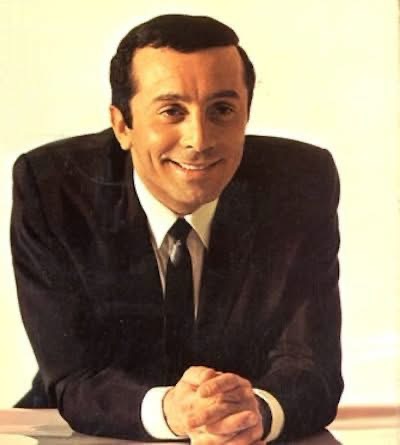
Remembering Al Martino, the legendary American singer and actor whose unforgettable voice brought romance, emotion, and timeless melodies to millions of music lovers. Born Jasper Cini on October 7, 1927, in Philadelphia, Pennsylvania, Martino became one of the most recognizable voices of traditional pop music.See more…
For generations of Americans, Al Martino represented an era when romantic ballads dominated the airwaves and singers won hearts through the power of their voices. His smooth delivery, emotional performances, and timeless recordings made him a beloved figure among fans of classic American music.
Martino grew up in a family of Italian immigrants and initially had ambitions beyond music. His early influences included legendary performers Al Jolson and Perry Como, whose success inspired him to pursue a career as a professional singer.
Another important influence was his family friend Alfredo Cocozza, who achieved international fame under the stage name Mario Lanza. Lanza encouraged Martino to pursue his musical ambitions and helped inspire him to adopt the professional name that audiences would eventually recognize around the world.
Before achieving fame, Martino served in the United States Navy during World War II. He took part in the invasion of Iwo Jima and was wounded during his military service. After the war, he returned home and began working toward his dream of becoming a successful singer.
In 1948, Martino moved to New York City to pursue opportunities in the music industry. He recorded songs for the Jubilee label and continued performing, hoping to establish himself among the talented singers competing for attention during the postwar years.
His major breakthrough arrived in 1952 when he appeared on the popular television program Arthur Godfrey’s Talent Scouts. Performing the Perry Como hit “If,” Martino won first place and attracted the attention of people who could help advance his career.
Following that television success, Martino secured a recording contract with the Philadelphia-based independent label BBS. He recorded “Here in My Heart,” a song that would change his life and establish him as a rising star in American popular music.
Released in 1952, “Here in My Heart” became a tremendous success, spending three weeks at No. 1 on the American pop charts in June of that year. The recording earned Martino a gold disc and helped him secure a deal with Capitol Records.
Martino continued his early success with songs including “Take My Heart,” “Rachel,” and “When You’re Mine.” These recordings reached the U.S. Top 40, demonstrating that his breakthrough was more than a one-time achievement.
His popularity also extended across the Atlantic. British audiences welcomed his romantic singing style, and he performed at prestigious venues, including the London Palladium. Songs such as “Now” and “Wanted” helped him build an impressive following in the United Kingdom.
Although musical trends continued to change throughout the 1950s, Martino remained committed to the expressive, romantic style that had first brought him recognition. In 1959, he signed with 20th Fox Records and released two albums through the label.
The 1960s brought another remarkable chapter in his career. In 1963, Martino achieved major American chart success with “I Love You Because,” his interpretation of the country song originally recorded by Leon Payne. The album of the same name reached the Top 10 of the Billboard 200.
His success continued with several other Top 10 American hits in 1963 and 1964. “Painted, Tainted Rose,” “I Love You More and More Every Day,” “Tears and Roses,” and his recording of “Silver Bells” helped cement his reputation as a leading romantic singer of the era.
Among the most recognizable songs associated with Martino is “Spanish Eyes.” Recorded in 1965, the melody became one of his signature recordings and helped introduce his voice to listeners around the world. Originally composed by Bert Kaempfert as “Moon Over Naples,” the song became an enduring favorite among fans of romantic music.
“Spanish Eyes” enjoyed further success when it was reissued in the United Kingdom in 1973, reaching No. 5 on the UK Singles Chart. Its international popularity demonstrated the lasting appeal of Martino’s musical style, even as the industry moved toward newer sounds.
Martino also proved that he could adapt to changing musical tastes. His disco-style version of “Volare,” also known as “Nel blu, dipinto di blu,” became a major European success in 1976, reaching No. 1 in Italy and Flanders and performing strongly in several other European countries.
Beyond music, Martino became part of American film history through his role as Johnny Fontane in Francis Ford Coppola’s The Godfather, released in 1972. He also performed the film’s romantic theme, “Speak Softly Love.” He later reprised his role in The Godfather Part III and appeared in the television presentation The Godfather Trilogy: 1901–1980.
Al Martino passed away on October 13, 2009, at the age of 82. His death marked the loss of a performer whose career connected the golden age of traditional pop with the unforgettable world of classic Hollywood cinema. His recordings, film appearances, and distinctive voice continue to be remembered by admirers of his work.
Today, Al Martino remains a memorable name for fans who cherish the music and entertainment of earlier generations. His daughter, Alison Martino, has also helped preserve cultural memories through her work with the popular Vintage Los Angeles Facebook page. Though Al Martino is no longer with us, songs like “Spanish Eyes” continue to bring back memories of love, family, and a musical era that will never truly disappear.
REST IN PEACE, AL MARTINO. YOUR VOICE WILL NEVER BE FORGOTTEN.