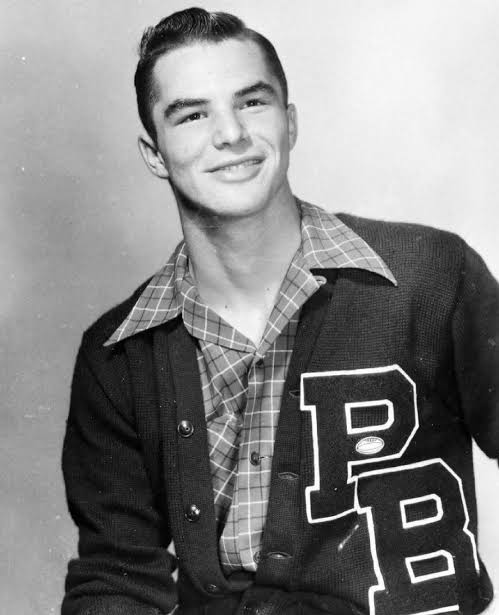
Burt Reynolds was one of Hollywood’s most recognizable stars, a charismatic actor whose smile, confidence, and unmistakable mustache made him a household name across America. Behind the confident public image, however, was a man whose life included painful setbacks, difficult relationships, financial struggles, and a career that nearly ended before it truly began.See more…
Born Burton Leon Reynolds Jr. on February 11, 1936, in Lansing, Michigan, he later grew up in Florida after his family moved south. His father, Burton Reynolds Sr., was a military veteran who eventually became a police chief, while his mother, Fern, helped raise a son whose future would take him far beyond the life he initially imagined.
As a young man, Burt was not dreaming of movie premieres or Hollywood fame. His greatest passion was football. He became a talented athlete at Palm Beach High School and earned a football scholarship to Florida State University, where he played as a halfback. At the time, his future appeared to be on the football field rather than in front of a movie camera.
Then came the first major turning point of his life. In 1955, Reynolds suffered a serious knee injury that interrupted his football career. A car accident later that year further complicated his recovery. The professional football career he had imagined was slipping away, forcing him to confront a future he had never planned for.
For a young athlete whose identity had been built around sports, losing that dream was a devastating blow. Reynolds eventually returned to college studies and began exploring a different path. A drama teacher, Watson B. Duncan III, encouraged him to audition for a stage production called Outward Bound. Reynolds won the lead role and impressed audiences enough to earn the 1956 Florida State Drama Award.
That unexpected success introduced him to a world he had never seriously considered. Acting offered him a new opportunity, but becoming a professional performer was far from easy. Reynolds worked various jobs while pursuing opportunities in theater, determined to build a career despite having little certainty about where his next paycheck would come from.
His early years in New York were marked by persistence and uncertainty. He took acting lessons, appeared in stage productions, and searched for work while trying to establish himself. In 1961, he landed a Broadway role in Look, We’ve Come Through. His determination gradually brought him closer to the entertainment industry he had once never imagined joining.
Hollywood eventually noticed him, and Reynolds began appearing in television productions. One of his early opportunities came with the series Riverboat. In 1962, he gained wider recognition when he joined the long-running Western series Gunsmoke, playing the blacksmith Quint Asper. The role helped introduce him to television audiences across America.
Despite these opportunities, Reynolds still faced the challenge of proving himself as more than a handsome television performer. His breakthrough in feature films came with Deliverance in 1972. The intense thriller, directed by John Boorman, showed audiences a different side of Reynolds and became one of the defining performances of his career.
The success of Deliverance helped transform him into a major movie star. That same year, Reynolds made headlines for another reason when he appeared nude on a bearskin rug in Cosmopolitan magazine. The photograph became one of the most talked-about celebrity images of the era. Reynolds later expressed regret about the decision, believing it may have affected how some people viewed him as a serious actor.
Rather than allowing that controversy to define him, Reynolds continued building an impressive film career. In 1974, he starred in The Longest Yard, a comedy-drama that connected with audiences through its combination of sports, humor, and rebellious spirit. The film further strengthened his popularity and drew on the athletic background he had once believed was lost forever.
Then came the movie that made him an enduring American pop-culture icon. In 1977, Reynolds starred in Smokey and the Bandit, playing the charming, rebellious Bandit alongside Sally Field and Jackie Gleason. The film became a massive box-office success and helped establish Reynolds as one of the biggest movie stars of the late 1970s.
His success continued into the early 1980s with films such as The Cannonball Run and The Best Little Whorehouse in Texas. In 1981, he was recognized as the world’s top box-office attraction for the fifth consecutive year, according to contemporary industry accounts. For a man whose football dreams had been destroyed by injury, the achievement represented an extraordinary second act.
But behind the glamorous image, Reynolds was also experiencing personal difficulties. His relationships frequently attracted media attention, particularly his romance with actress Sally Field. The two became a celebrated Hollywood couple after working together, and Reynolds later spoke openly about his deep feelings for her and his regret over how their relationship ended.
Reynolds married actress Loni Anderson in 1988, and the couple adopted a son, Quinton. Their marriage initially attracted enormous public interest, but it eventually deteriorated into a highly publicized and bitter divorce. The separation brought emotional strain, legal disputes, and significant financial consequences. Reynolds later acknowledged that personal problems had affected his professional life.
Financial difficulties became another major challenge. Despite years of success and substantial earnings, Reynolds faced costly divorces, expensive investments, and spending decisions that placed pressure on his finances. In 1996, he filed for Chapter 11 bankruptcy. His struggles later included a high-profile foreclosure dispute involving his Florida property. His experience became a reminder that even extraordinary fame and wealth do not guarantee financial security.
Just when it seemed that his greatest achievements might belong to the past, Reynolds delivered one of the most acclaimed performances of his career. In 1997, he played Jack Horner, a film director, in Paul Thomas Anderson’s Boogie Nights. The performance earned him a Golden Globe Award and an Academy Award nomination for Best Supporting Actor. It was a remarkable comeback that introduced his talent to a new generation of moviegoers.
Reynolds continued working in film and television in his later years, appearing in projects including The Last Movie Star. He also taught acting and remained connected to the entertainment industry. Although his health and financial circumstances presented challenges, he continued accepting roles and making public appearances, demonstrating a determination to remain active in the profession he loved.
On September 6, 2018, Burt Reynolds died at the age of 82 at a hospital in Jupiter, Florida. His death was widely mourned across the entertainment world. He left behind a career spanning decades, with performances ranging from intense dramas to beloved comedies. His life was not without mistakes or regrets, but his ability to recover from setbacks became an important part of his story.
Today, Burt Reynolds is remembered as much more than the charming star of Smokey and the Bandit. He was an athlete whose dreams were interrupted, an actor who fought to establish himself, a superstar who experienced personal and financial hardship, and a performer who earned critical recognition late in his career. His journey reminds us that even those who appear to have everything can face struggles the public rarely sees. Though Burt Reynolds is gone, his films, his humor, and his unmistakable screen presence continue to live on in the memories of millions.